




Your agents work hard, yet the satisfaction survey keeps coming back flat. This guide is for call center and support leaders who need to know how to improve CSAT score without burning out the team. It covers what the metric tracks and nine practical ways to lift it. Most fixes are simple. Some start paying off within a few weeks.
Key takeaways
- A CSAT score only helps when you know what drives it, so start with a clear baseline and honest survey questions.
- Your unhappiest customers hold the most useful feedback, and a short follow-up call can turn a critic into a fan.
- Automation works best on routine requests, while trained agents keep the complex and emotional calls on track.
- Quick gains usually come from closing coverage gaps, like after-hours calls, before you touch anything else.
What CSAT Measures and Why It Matters
Customers don't hand out second chances anymore. In a 2026 Verint survey, 79% of respondents said they'd switch to a competitor after a single negative experience. Just one bad call. CSAT, short for Customer Satisfaction Score, shows how close you are to that line after every interaction.
It's one of the core call center performance metrics, though it works in any support channel. The idea is simple. It asks customers how happy they were with the help they got. In a call center, that answer reflects agent knowledge and how fast agents solved the issue.
How the CSAT Rating Scale Works
Most surveys ask customers to rate a single interaction right after it ends. The question is short. Scales usually run from 1 to 5, though some teams use 1 to 10, emojis, or colored bars to get more people to answer.
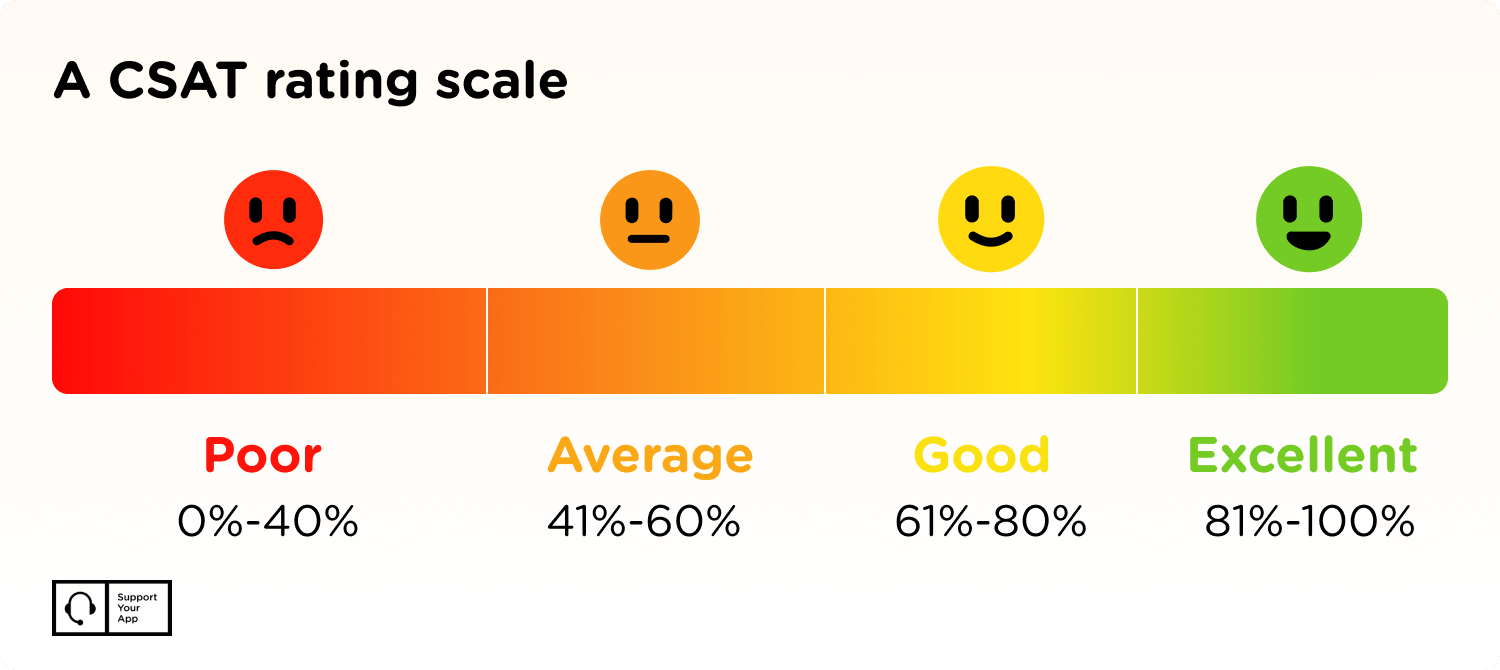
To get the score, count the satisfied responses (usually 4s and 5s on a five-point scale). Divide that by the total number of responses, then multiply by 100. If 80 out of 100 customers pick 4 or 5, your CSAT is 80%. The math is easy. Reading what's behind the number takes more work.
Why CSAT Matters for Your Business
Stronger brand reputation. Every call is a small public test of how your company treats people. Happy customers leave good reviews and recommend you to friends. Unhappy ones post about it. A steady CSAT score shows you're passing that test far more often than you're failing it, and people notice.
Customer retention and loyalty. Satisfied customers come back, while unhappy ones often leave without a word. According to Qualtrics XM Institute, 47% of bad experiences lead customers to cut their spending. CSAT works as an early warning for that kind of silent churn. Silence costs money. It's a core part of customer retention.
Operational insight. Customers spot problems your internal reviews miss, like slow callbacks or confusing phone menus. Their scores point straight at the weak spots. Treat them as free consulting. Agents who keep earning high ratings also show you which habits are worth copying across the whole team.
Steadier revenue. Happy customers buy again and stay on longer contracts. That makes it worth tracking. It touches renewals and referrals too, and it lowers what you spend replacing customers who walked away after a frustrating call. Steady scores also make revenue forecasts less of a guessing game.
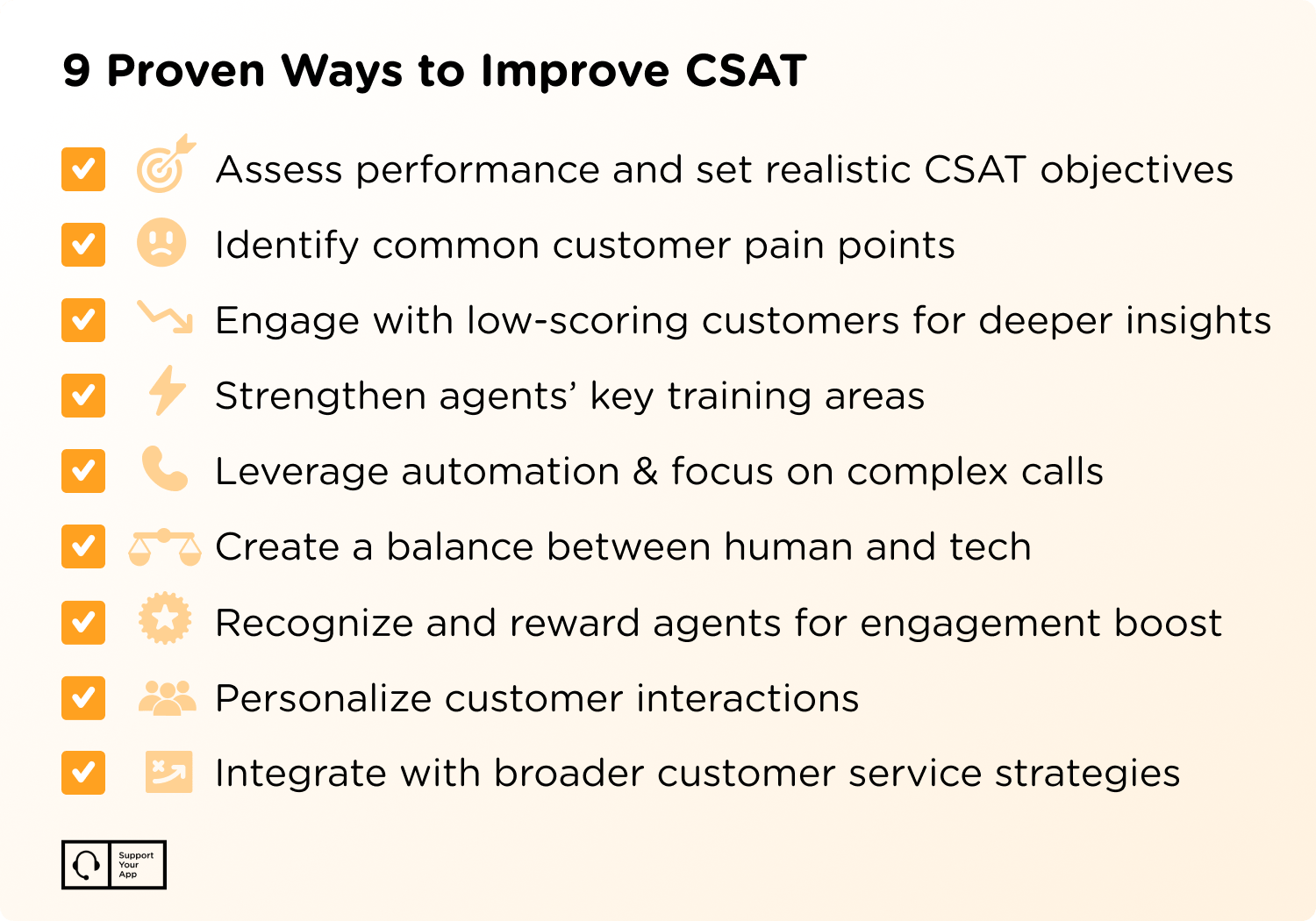
How to Improve CSAT Score: 9 Proven Ways
There's no single trick here, and anyone promising one is selling something. Satisfaction grows from many small fixes that add up over months. The nine steps below work across industries, from SaaS to eCommerce. Start with the first two. Every later step depends on the data they give you.
1. Measure Your Baseline and Set Achievable Goals
Changing things right away is tempting. Hold off for now. First, find out what needs fixing. Go beyond the classic "How satisfied were you?" question and ask about wait times and whether the agent solved the problem on the first try.
Turn those answers into customer satisfaction KPIs that fit your business. Then pick a target you can hit. Aiming for perfection sets the team up to fail. Keep the target modest. A small, steady goal for one specific criterion is a smarter way to increase CSAT over a quarter. Re-check the score every month.
2. Find the Pain Points Behind Low Scores
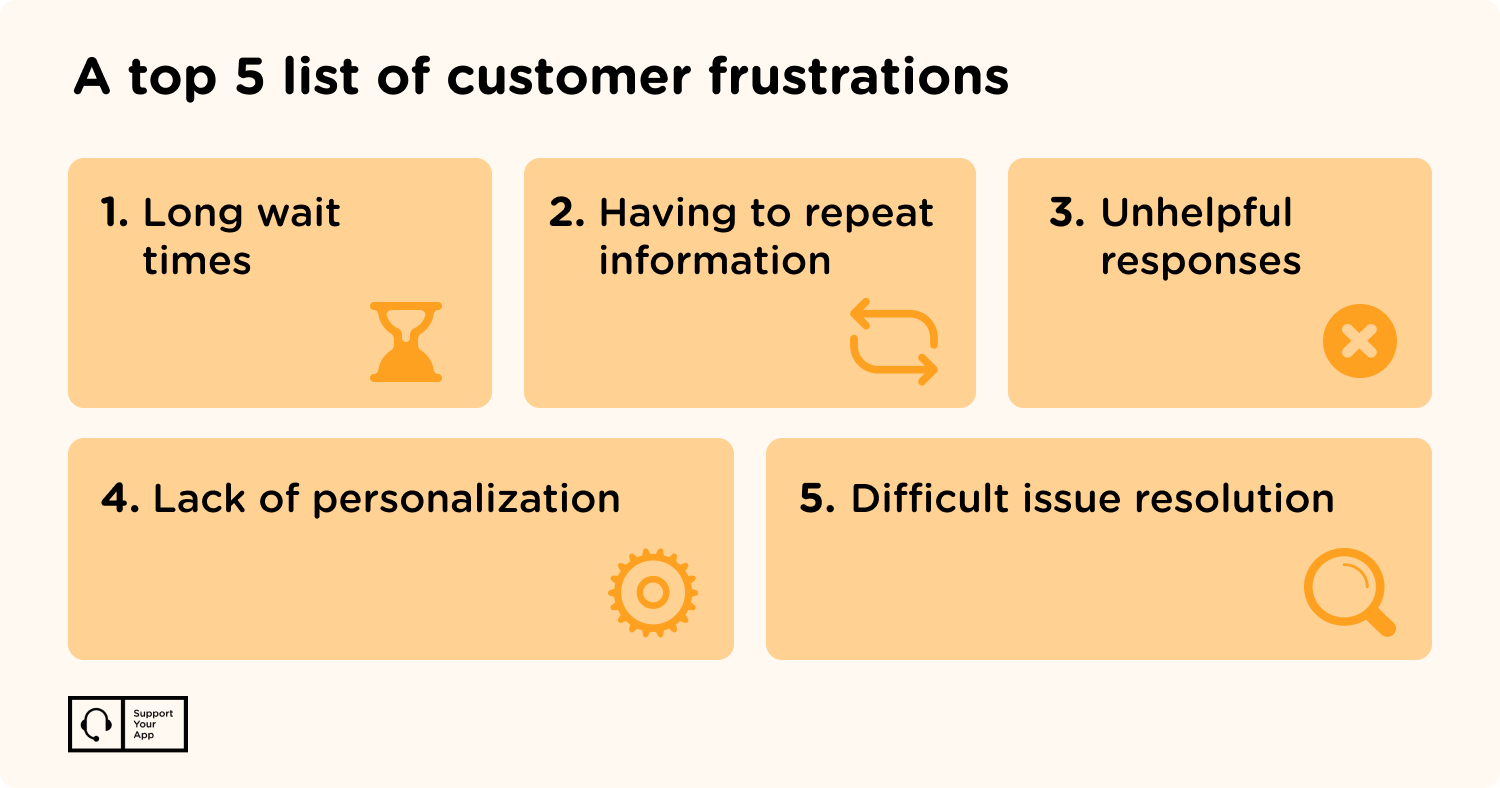
Your survey data and call transcripts already hold most of the answers. If there's too much to read manually, natural language processing (NLP) tools can group feedback by theme. Patterns show up fast. You'll see the same complaints again and again. Common ones include:
- Long hold times before reaching an agent
- Repeating the same details to several people
- Agents who don't know the product well
- Confusing website navigation or contact options
Once the list is in front of you, the next move gets clearer. Knowing how to improve CSAT gets much easier when you can name your most frequent complaints. Rank them by volume. Then fix the biggest one first and watch what happens to the scores tied to it.
3. Talk to Customers Who Scored You Low
This step takes some nerve. Unhappy customers give you the most useful feedback you'll ever get, so treat low scores as leads, not losses. Make a list of recent detractors and prepare a few open questions. Try "What was the most frustrating part of the call?" or "What should we have done differently?"
Let them talk, and only step in to clarify. Explain why you're reaching out and what you plan to change. A sincere follow-up is one of the fastest ways to improve CSAT with people who were ready to leave. Some will give you a second chance. They're glad someone asked.
4. Train Agents Where It Counts
By now, you'll have plenty of material for a training plan. Put it to use. Short, regular sessions (say, once a week) beat a single marathon workshop that nobody remembers. Focus on the gaps your data revealed, since that's where training pays off fastest. Key areas usually include:
- Empathy and emotional intelligence. These skills matter most during tense calls and with customers who are already upset.
- Product knowledge and troubleshooting. Regular updates on new features help agents answer questions before customers finish asking them.
- Performance standards. Even strong agents slip into autopilot on repetitive calls and forget the details that keep quality high.
- Policies and ethics. Agents need to know the legal rules behind their work. Refresh this training whenever something changes or a weak spot shows up.
If your team lacks the time or headcount to train properly, a call center outsourcing partner can take on part of the volume. That's often a faster way to increase CSAT scores than stretching a tired team even thinner. In-house agents get room to learn. The queue keeps moving while they do.
5. Automate the Routine and Free Up Agents for Complex Calls
Not every call deserves the same amount of agent time. Password resets and order status checks follow the same script every time. Complex billing disputes don't. A clear FAQ page and an IVR menu that answers basic questions can take a big chunk of simple calls off the queue.
Smart call routing helps too. It sends each caller to the agent with the right skills, so fewer callers bounce between departments. Automation has limits, though. Push it too far, and customers start fighting the system instead of solving their problem. That's where balance comes in.
6. Balance Human Agents and AI
Most people aren't against AI support. They're against AI that doesn't fix anything. In the same Verint survey, 69% of customers said they'd switch to automated service if it could fully resolve their issue. Note the word "fully." A bot that loops people back to the menu can do more harm than no bot at all.
So let AI take simple tasks and always give callers an easy path to a human. Offer a callback when the line is busy. Another option is AI that helps agents instead of replacing them. SupportBrain drafts replies and summarizes long threads, while agents review and send every reply.
Teams using SupportBrain report a 96% average CSAT score. Agents stay in control of every message, but they spend less time hunting for answers. That hybrid model is a big part of how to improve CSAT score without losing the human touch. Customers get speed and a person.
7. Recognize and Reward Your Agents
Agents drive CSAT more than any tool does. Yet many managers only talk to them about mistakes and rules. People work harder for recognition than out of fear of getting written up. When your team trusts you, they want to feel part of something bigger. Money isn't everything here. A few ways to keep motivation high:
- Performance-based incentives. Bonuses, growth opportunities, public shout-outs, or small on-the-job perks give top performers a reason to keep going and others a goal to chase.
- A supportive environment. Flexible schedules and manageable workloads show agents you see them as people, not ticket counts.
- Access to new people. Let top agents meet specialists in departments they're curious about, or set up informal chats with senior managers. For many, that exposure is a reward in itself.
8. Personalize Every Interaction
"Business is business" doesn't hold up with most customers. People want to feel recognized, not processed, and a CSAT call center survey is often where they say so. A Forbes Business Council article lists poor service and a lack of personalization among the ways companies lose loyal customers. Nobody likes feeling like a ticket number.
Your CRM should show agents past interactions and recent purchases before they pick up the phone. That way, they already know who's calling and why they might be calling again. No one starts from zero. Simple touches go a long way:
- Greeting customers by name and referencing past conversations
- Suggesting solutions based on their history
- Following up on an earlier issue
All of this needs clean customer data and a few seconds for agents to scan it before answering. It's worth the effort. Customers can tell when someone did their homework, and that small moment of recognition often shows up in the survey that follows.
9. Connect Your Call Center to the Wider Support Strategy
Your call center doesn't work in isolation. A confusing social media reply can send a wave of customers to the phone lines, and a broken help article can do the same. Every channel feeds the others. That's why every team that talks to customers should share the same satisfaction goals.
When every team works from the same targets and customer history, people stop repeating themselves when they switch channels. An omnichannel customer support setup makes that easier. Agents see the full conversation, no matter where it started. A customer can open a chat and finish on the phone. Nothing gets lost.
Which Call Center Solutions Boost CSAT Scores Quickly?
Some fixes take months to show up in the numbers. Others work within weeks. The fastest wins usually come from closing coverage gaps. A customer who can't reach anyone at all will never give you a good score, no matter how great your agents are.
Softorino, an app developer with over 15 million downloads, is a good example. Many of its support requests came in after hours or during shift changes, which led to inconsistent answers and lower CSAT. The company had stepped back from phone support. Users still wanted to call.
SupportYourApp built a Voice AI agent on Softorino's product knowledge base. It picks up calls instantly, handles routine questions, and escalates complex cases to a human consultant. Resolution time dropped from 15-20 minutes to under 5, and CSAT climbed from 3.5 to 5.0. The Softorino case study has the full story.
Other quick options include overflow support for seasonal spikes and an outsourced team that covers nights and weekends. If you're working out how to improve CSAT score on a tight timeline, look at coverage first. Start with the hours and channels where customers currently get no answer at all.
Turning CSAT Into a Habit
Your CSAT score is one of the most honest signals your call center gets. It shows how customers feel about the help they received and how well your team works together. It also tells you when to pause and rethink a process that isn't working. Treat it as a guide.
Every company is different, and budget or team size might limit what you can change right now. That's fine. Plan for the long run, start with a baseline, and pick one or two fixes to test. Figuring out how to improve CSAT in customer service is ongoing work, not a one-off project. Then measure again.