


When your support team keeps missing calls after hours, outsourcing starts to look like the smarter move. This guide is for growing companies that want to know how to hire a call center without a costly misstep. It covers what to define first, how to vet providers, what the work costs, and which numbers show the partnership is working.
Key Takeaways
- Start with your own call data and request types, because a provider can only staff the team you describe to them clearly.
- Judge providers on tech fit, room to scale, cultural match, and certified security before you compare price tags.
- Cost depends on team size, support tier, languages, and integrations, so ask for an itemized quote before you sign anything.
- Plan a KPI review about a month after launch to catch weak spots while the setup is still easy to adjust.
Why Companies Hire a Call Center Instead of Building One
Customers don't care what time it is where your team sits. According to Zendesk's CX Trends 2026 report, 74% of consumers now expect customer service to be available 24/7. For a small in-house team, that expectation means night shifts, weekend schedules, and tired agents who start making mistakes.
The same report found that 85% of CX leaders believe customers will drop a brand that can't resolve an issue on first contact. Hiring and training people fast enough to meet that bar gets expensive. That's why many companies hand phone support to a specialist instead of growing their own team from scratch.
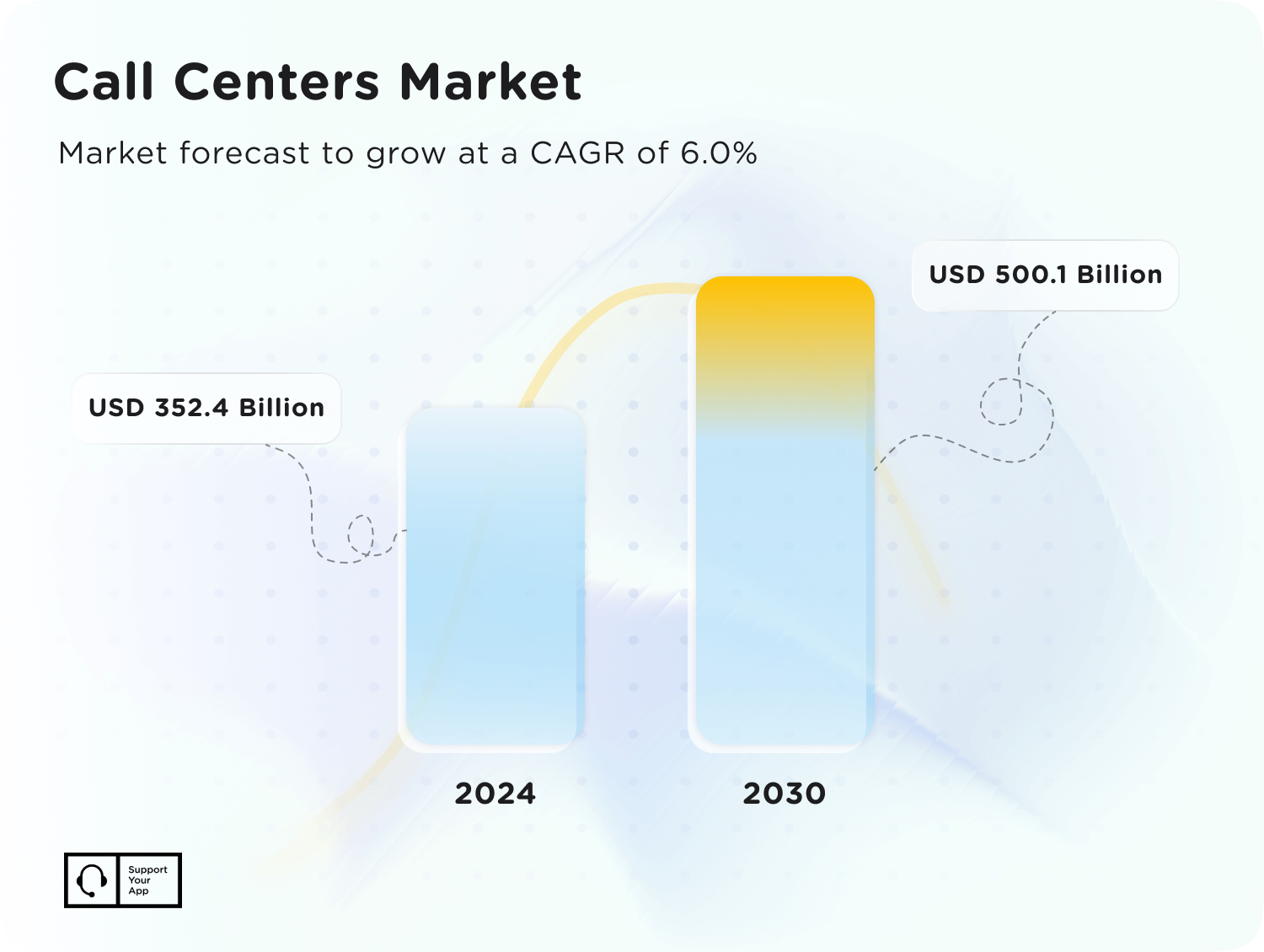
Market forecasts point the same way. Research and Markets projects the global call center market will reach $500.1 billion by 2030, with outsourced call centers growing faster than in-house operations. More companies are buying support as a service, and the pool of providers to choose from keeps getting bigger.
Outsourcing hands day-to-day phone support to a team that already has trained agents and working processes. You keep control of the goals and the customer experience, while the provider handles hiring and shift planning. If you're researching how to hire a call center, that split of responsibilities is the first thing to get clear in your own head.
How to Hire a Call Center, Step by Step
From the outside, the process looks short: find a provider, sign a contract, forward the phone line. The companies that get good results do most of the work before the first sales call. The steps below follow the order that works best for the clients we onboard.
Step 1: Audit Your Call Data and Customer Needs
Start with the numbers you already have. A provider can only plan the right team size and schedule if they see your workload as it is, peaks and quiet weeks included. Guesswork here leads to an overstaffed or understaffed team from the first week. Pull these before you contact anyone:
- call volume, customer logs, and peak hours from the past 12 months
- upcoming launches and marketing campaigns that could spike demand
- customer feedback surveys that show trends and expectations
- the tools you run today, such as your CRM, help desk, and any AI tools
- your current call center performance metrics
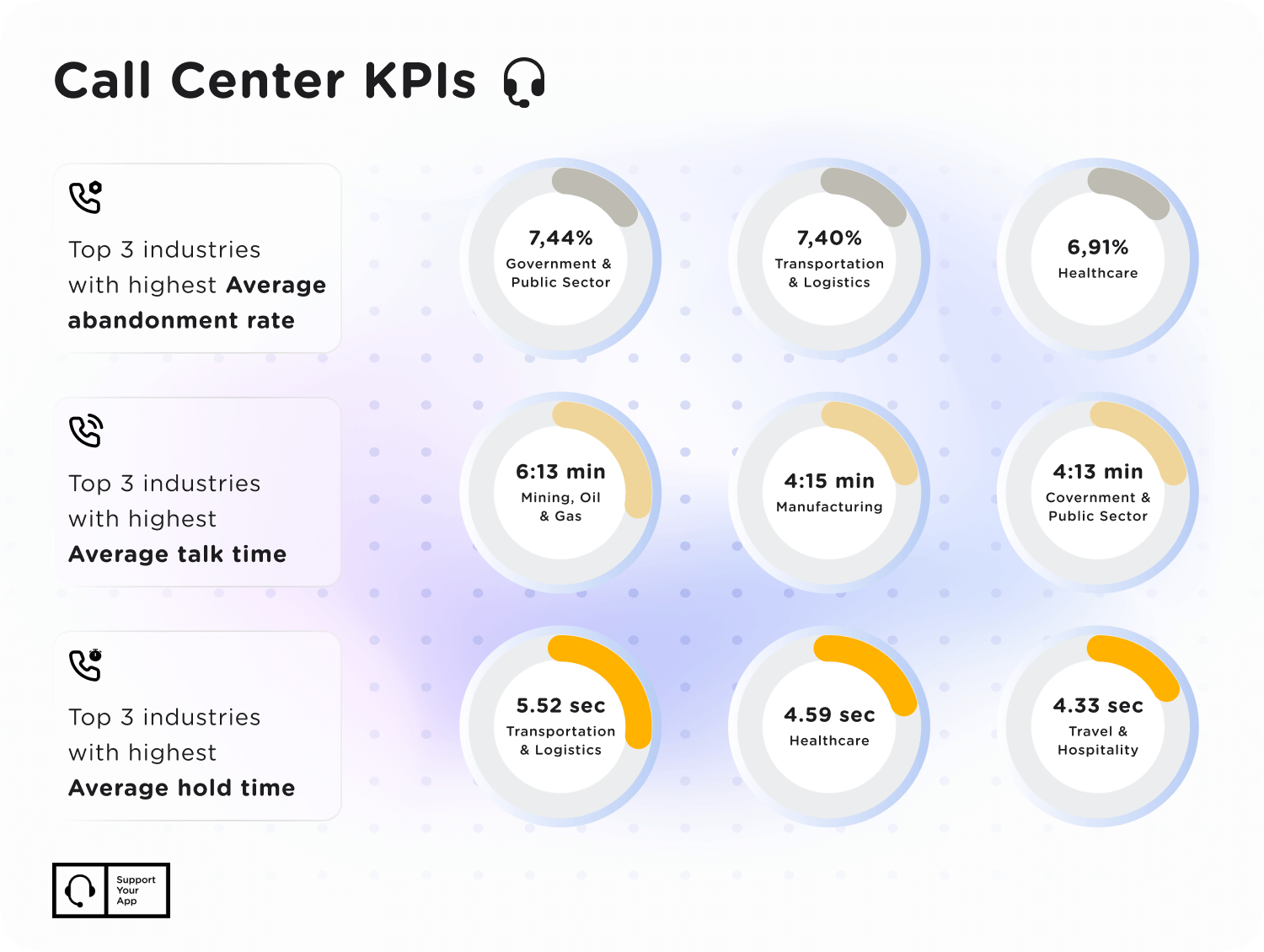
Industry KPI benchmarks give you a useful starting point for your own targets. The figures below date from 2024, so treat them as a rough reference. Check them against your own history before you set goals for a provider.
Step 2: Match Request Types to Agent Skills
Next, sort your incoming requests by type. Each type calls for a different skill set. This map sits at the core of how to hire call center agents who fit your product. Share it with every provider you talk to:
- Technical support: product knowledge and solid troubleshooting skills
- Product questions: detailed knowledge of features and availability
- Order support: experience with order status, shipping, and returns
- Billing and accounts: safe handling of payment and account data
- Complaints and feedback: calm de-escalation and conflict resolution
- General questions: working hours, contact details, and company policies
A clear request map lets the provider pick specialists instead of generalists. It also shows which requests need senior agents and which ones a newer agent can handle after a short product training. That split keeps costs down without hurting service quality on harder calls.
Step 3: Shortlist and Vet Providers
Now build a shortlist. A curated ranking such as our list of top 10 call center outsourcing companies saves you hours of research. Book calls with three or four providers, and ask each one the same questions so you can compare the answers side by side.
Learning how to choose a call center comes down to proof. Ask each provider about a team they built for a company like yours. A strong provider will walk you through the tools and the escalation path without hesitation, and won't dodge questions about agent turnover.
Step 4: Ask for an Itemized Quote
Pricing models differ from one provider to the next, so a single monthly figure tells you very little. Ask for a breakdown that covers team size, support tier, languages, and setup work. You'll find the main cost drivers explained in the cost section further down this article.
Step 5: Start Small, Then Scale
Before you move all your phone traffic, run a pilot with a small team or a single line, such as after-hours calls. A pilot shows you how agents handle your customers before the stakes get high. If the numbers look good after a few weeks, expand the scope step by step.
What to Look for in a Call Center
Once you have a shortlist, four factors separate a good fit from an expensive mistake. Price matters too, but it makes a poor first filter. The cheapest quote often hides gaps in tooling, coverage, or security that cost you more later.
Technology and Infrastructure
Your provider should work inside the tools you already use, or move you onto better ones without losing ticket history. Check for CRM and help desk integrations. If you need phone, email, live chat, and social media in one place, ask about omnichannel coverage and which platforms their agents use every day.
Ask about AI too. Many providers now pair human agents with voice AI for routine calls. At SupportYourApp, SupportVoice, our AI voice agent, answers inbound and outbound calls 24/7 in 32 languages. It hands complex cases to a human agent, which covers after-hours calls and sudden spikes without new hires.
Scalability and Flexibility
Your call volume won't stay flat. Product launches and seasonal peaks push it up, sometimes within a week. Ask how fast the provider can add agents and how they keep quality steady while the team grows. A provider that needs months to scale will leave you short-staffed at the worst moment.
Flibco, a transportation company, faced this exact problem ahead of peak travel season. It needed round-the-clock support in English and French without a jump in costs. Over two months, we moved Flibco to a 24/7 bilingual support setup, so the team was ready before the seasonal surge hit.
Cultural Fit and Communication
Agents become the voice of your brand on every call. They need to sound like your company and understand what your customers expect. Ask how the provider trains agents on brand voice and product knowledge, and request a mock call before you sign. Language coverage belongs here too, especially if you sell in several markets.
Security and Compliance
Every call can involve payment details or personal data, so security deserves the same weight as price. Ask for certificates instead of promises. Look for PCI DSS for card data and ISO/IEC 27001 for information security. Then check GDPR, CCPA, or HIPAA compliance, depending on where your customers live.
SupportYourApp is a PCI DSS Certified Level 1 and Level 2 Service Provider with ISO/IEC 27001 certification. We're also compliant with GDPR, CCPA, and HIPAA. That matters if you handle health records or payment data for customers in the US or the EU. Fines for a breach there can be severe.
Pros and Cons of Hiring a Call Center
Outsourcing solves a lot of problems, but it brings a few of its own. Weigh both sides against your budget and how much day-to-day control you want to keep. The table below shows how the trade-offs usually play out for growing companies, factor by factor.
Pros and cons of hiring a call center
| Factor | Pros | Cons |
| Infrastructure | No need to buy offices, phone systems, or equipment | You depend on the provider's setup and uptime |
| Cost | No hiring or training costs on your side | Low quotes can hide extra fees for setup or languages |
| Expertise | Agents already trained in support across many products | Agents need time to learn your product in depth |
| Scale | Add or remove agents as volume changes | Fast scaling needs clear processes on your side |
| Security | Certified providers bring tested security controls | A weak provider adds data risk, so vetting matters |
| Control | Your team gets time back for core work | You manage a partnership instead of managing agents directly |
Virtual call center services are one way to get professional infrastructure without a big upfront spend. Agents work from secure remote setups, so you skip office costs. You can also add coverage in new time zones faster than with a single physical site.
How Much Does It Cost to Hire a Call Center?
The price depends on your call volume, the number of agents, the support tier, and where the team works. Language coverage, working hours, and tool integrations shift the number too. That's why two quotes for the same headcount can look very different on paper.
At SupportYourApp, our pricing plans scale with team size, support complexity, and the level of customization you need. As your customer base expands, you can add languages, advanced integrations, and higher support tiers. A plan can start with a single agent and grow into an enterprise-size team.
Outsourcing also removes costs that in-house teams carry all year. You don't pay for office space or equipment, you skip recruiting and training, and you can scale without fixed overhead. Our guide on how to reduce call center costs breaks down where those savings come from.
A provider will also shape the team around your needs. Bigger programs add specialist roles for quality control and agent training, while smaller programs keep the setup lean. Here are the roles a typical call center team might include.
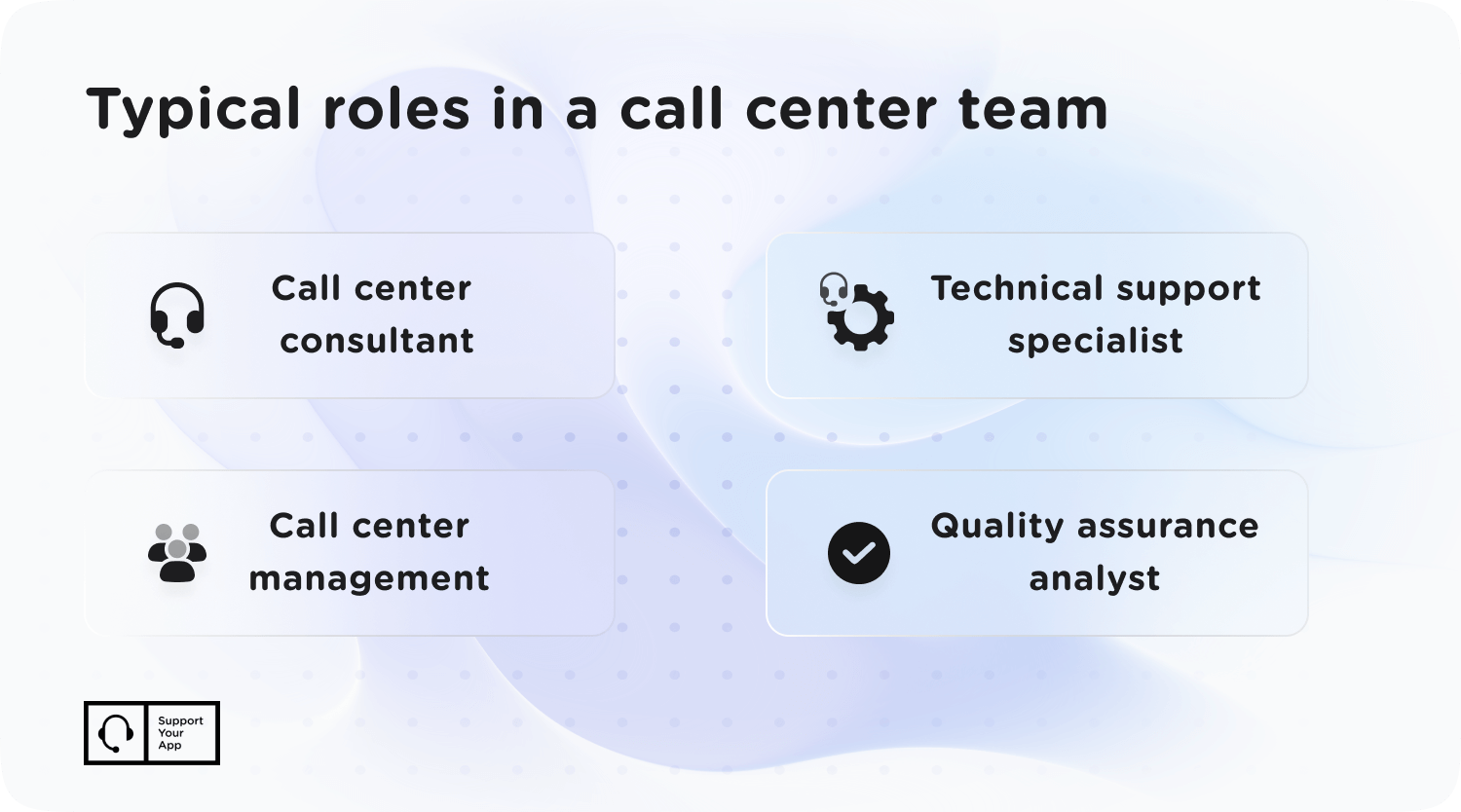
Not every company needs every role. A product with simple flows may not need a dedicated technical support agent or QA specialist at the start, which keeps the monthly bill lower. Each role you keep needs its own profile. Ask the provider how to hire a call center agent for that seat and which skills test they use.
How to Measure Call Center Performance After Launch
About a month after launch, review the numbers against the goals you set in step one. Early reviews catch problems while the setup is still easy to change, before small gaps turn into customer churn. Track these KPIs from the first day:
- average handle time
- first-call resolution rate
- call abandonment rate
- customer satisfaction score (CSAT)
Look at trends over several weeks rather than single days, and share the results with the provider in a regular review. A good partner comes to that meeting with its own improvement ideas. It won't wait for you to spot every issue in the dashboard yourself.
Staffing gaps are often the real cause when these numbers slip, so ask how quickly your provider can add or replace agents without lowering quality. Hiring speed is easy to test, and one example is how SupportYourApp helped Cocoatech fill two specialist roles.
The team handled sourcing, screening, and onboarding, including security training for a role that deals with sensitive payment data, and delivered the first qualified candidate within 10 days. A partner that works at that pace can close a gap before it shows up in your CSAT.
Summary
Hiring a call center works best when you treat it as a planned project, not a quick fix. The answer to how to hire a call center starts with your own workload. Define your call volume and request types, then judge providers on technology, scale, culture, and security before you compare prices.
Ask for an itemized quote, start with a pilot, and review KPIs after the first month. If you want a team that can start small and grow with you, our call center outsourcing service is a good place to begin.