


You can hire good agents and keep a tidy knowledge base, and still hear complaints nobody can explain. This guide is for support leads who need a dependable way to check what happens in customer conversations. It explains how call center quality assurance works and which practices hold up, with two SupportYourApp client cases to show the results.
Key Takeaways
- QA only works when agents know the standard before anyone scores a call, so written guidelines come before the first review.
- A short scorecard with clear examples beats a long one that every reviewer reads a little differently.
- Feedback loses value fast, which is why coaching should follow a review within days instead of waiting for the quarterly check-in.
- Automation can flag risky conversations at scale, but a person still has to judge tone and context before anyone gets coached.
What Is Call Center Quality Assurance?
One bad call costs more than one unhappy customer. Qualtrics XM Institute found that 34% of consumers spend less with a company after a negative experience, and 13% stop spending with it entirely. Most of those cuts happen without a complaint, so teams need a way to spot problems before the churn report does.
Call center quality assurance is the process of reviewing customer conversations against a shared standard, then using the results to coach agents and fix processes. It started with phone calls, but most teams now apply the same scorecard to chat and email. The goal is consistent service, whoever picks up the conversation and whatever time it arrives.
The team first defines what a good interaction looks like. Reviewers then score a sample of conversations against that definition and share feedback with agents. Managers look for patterns that point to training gaps or broken workflows. Once those fixes land, the criteria get updated and the cycle starts again.
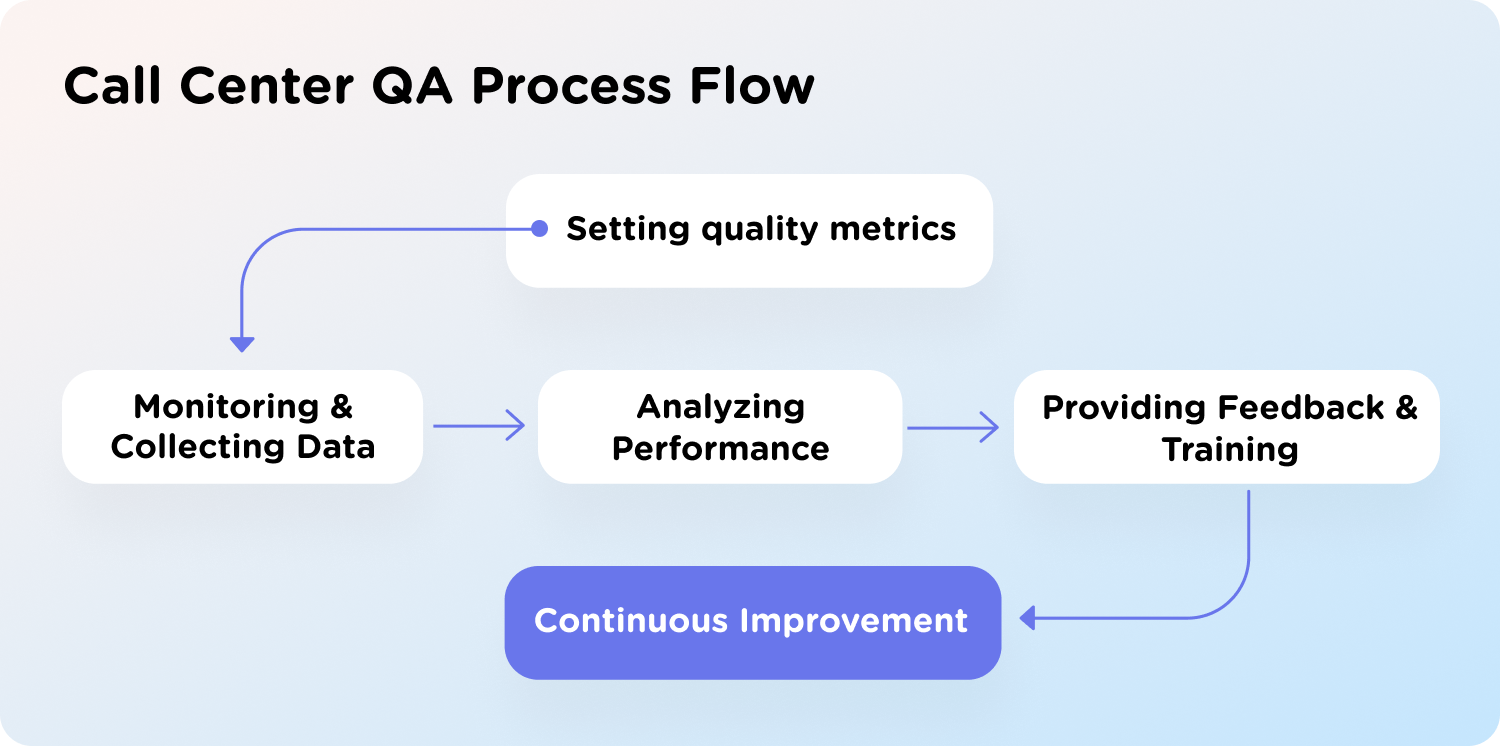
Contact center quality assurance also looks past individual agents. If half the team gives the same wrong answer about refunds, the problem sits in the knowledge base or the policy, not in the people. Good QA separates those two cases, because coaching an agent won't fix a help article that's out of date.
How QA Differs From Quality Monitoring
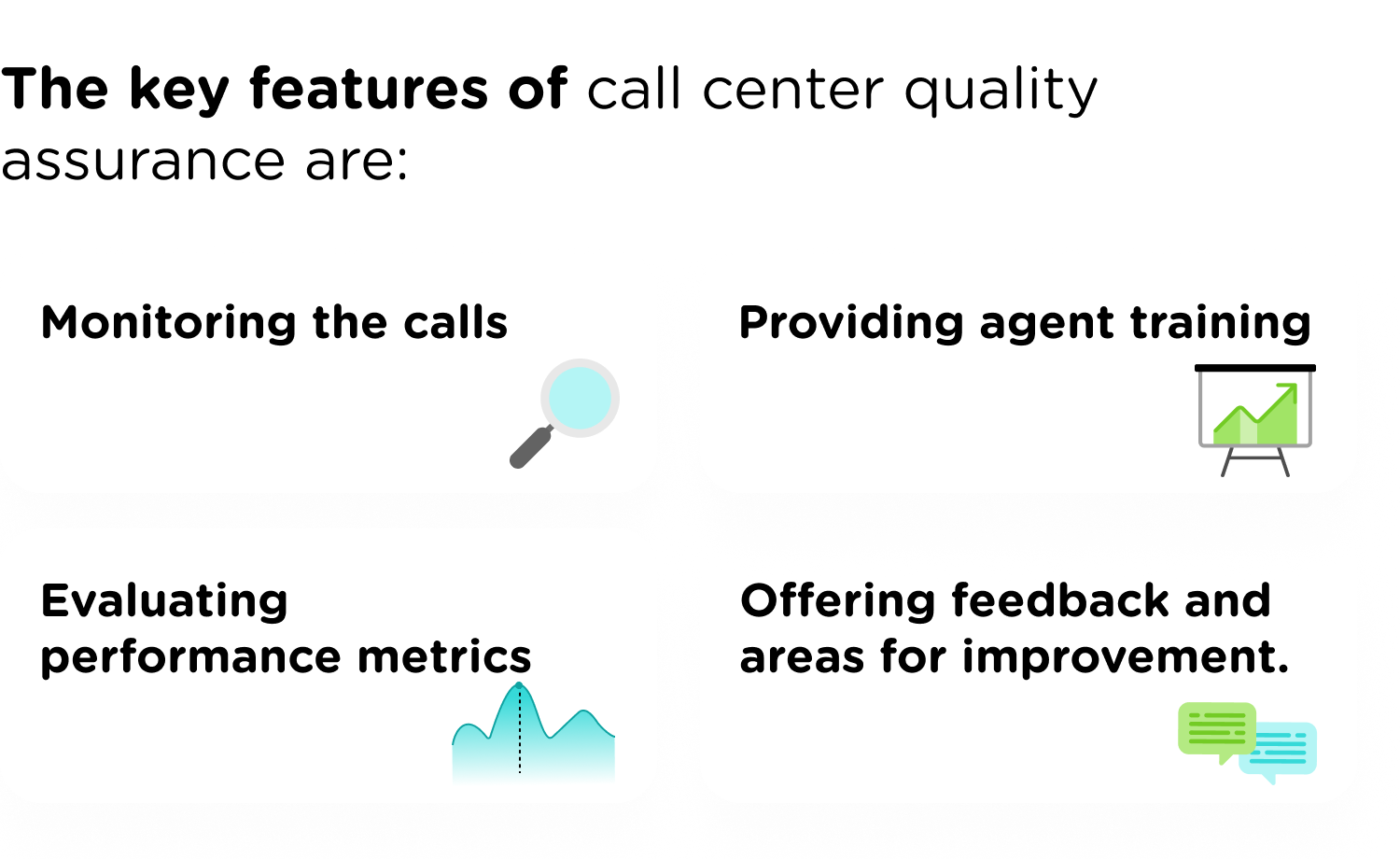
The two terms get mixed up a lot. Quality monitoring in a call center is the act of listening to calls or reading tickets, often while they happen. QA is the wider system around it. It sets the standards and runs the coaching that turns what reviewers notice into changes agents feel on their next shift.
Why Quality Assurance for Call Centers Pays Off
Customers hand out fewer second chances than they used to. In the Zendesk CX Trends 2026 report, 85% of CX leaders said customers will drop a brand that can't resolve their issue on first contact. That turns every inconsistent answer into a retention risk, and QA is how you find those answers before customers do.
Fewer Customers Call Back With the Same Problem
Most repeat contacts trace back to something fixable, like a missing troubleshooting step or an agent who never heard about a product change. QA reviews surface these gaps while they're still small. Fix them once, and the customer doesn't need a second call to get the answer they wanted from the first.
Agents Know What Good Looks Like
Agents can't hit a target nobody wrote down. A clear standard tells a new hire what a strong call sounds like on day one, and regular reviews show experienced agents where they're slipping. Teams that read QA results next to their call center performance metrics see why handle time moved, not only that it did.
Compliance Gaps Show Up Before an Audit Does
Fintech and healthcare teams need agents to verify identity and handle payment data the same way on every call. A reviewer checking for those steps catches a skipped verification on a Tuesday afternoon, months before an auditor would. The difference between those two moments is often the size of a fine, plus the cleanup work that follows it.
Call Data Feeds Product and Training Decisions
Reviewers hear things dashboards miss, like a wave of confused calls after a release or a competitor's name that keeps coming up. When QA writes these patterns down and shares them with the product and marketing teams, support stops being a cost line. It becomes the earliest warning signal the company has.
Call Center Quality Assurance Best Practices
These practices hold up across team sizes and channels, from a five-person chat desk to a multilingual phone team. None of them need expensive software to start. For a wider view of how to run the floor itself, our guide to call center best practices covers the rest of the day-to-day operation.
Write Call Center Quality Assurance Guidelines Before Scoring Anything
Reviewers and agents need the same definition of a good interaction before the first review happens. Write down what you expect for the greeting, verification, troubleshooting, tone, and closing, with an example of a pass and a fail for each. Without that, two reviewers will score the same call differently, and agents will stop trusting the results.
Keep the Scorecard Short
A scorecard with dozens of criteria looks thorough, but reviewers rush through it and agents can't remember it. A shorter list, grouped into categories like accuracy and customer experience, is easier to apply the same way every time. Mark critical items, such as a skipped identity check, as automatic fails so they never get averaged away.
Calibrate Reviewers Every Month
Calibration means several reviewers score the same conversation on their own, then compare notes. Where their scores differ, the guideline needs a clearer example. It's the least glamorous part of call center quality assurance and usually the first one teams drop. Invite a senior agent now and then, since agents spot vague criteria faster than anyone.
Give Feedback Within a Few Days
Feedback on a call from last month barely registers. Coach within a few days of the review, while the agent still remembers the conversation, and keep the advice specific. "Resolve tickets faster" doesn't help anyone. "Confirm the device model before you start troubleshooting" gives the agent something concrete to try on the very next call.
Combine Automated Analysis With Human Review
Manual review only reaches a small sample of conversations. Speech and text analytics can screen every interaction for signals like negative sentiment or long silences, then send the risky ones to a reviewer. A person still has to judge the flagged calls, because a long pause might mean the agent was checking an account, not stalling.
When reviews keep flagging the same inconsistent answers on email and chat, the fix often sits upstream of QA. SupportBrain, SupportYourApp's AI assistant for agents, drafts replies and pulls answers from the knowledge base inside the agent's workflow. Agents review and send every reply, so answers get more consistent while a person stays in charge.
Turn QA Findings Into Targeted Training
QA data shows which skills each agent needs to work on, so the same generic course for the whole team wastes everyone's time. Build short modules around the gaps reviewers find most often and assign them to the people who need them. A structured learning and development program helps most when new agents join in batches.
Recognize Good Calls Too
QA that only finds mistakes teaches agents to fear the review. Share strong calls in team meetings and tie high scores to something agents value, like schedule priority or a path toward team lead. People accept criticism more easily from a process that also notices when they get things right.
Common Contact Center QA Challenges
Every QA program runs into friction once it grows past a handful of reviewers. The problems below show up across industries and team sizes. Each one has a fix that doesn't need a bigger budget, only a change in how the review process runs from week to week.
Too Much Data, Too Little Time
Recordings pile up faster than reviewers can get through them. Ask any quality assurance call center lead what eats their week, and listening time usually tops the list. Pick a sampling rule that reaches every agent each month and add flags for complaints and escalations. Drop any metric that doesn't change a decision you make.
Agents Who See QA as Surveillance
If agents only hear from QA when something goes wrong, they'll treat every review as a threat. Share the scorecard openly and give agents a clear way to dispute a score. Self-review helps too. An agent who scores their own call before the reviewer does walks into the feedback session ready for coaching, not a verdict.
Standards That Keep Changing
Products ship new features and regulations get rewritten, so a scorecard from two years ago likely misses whatever changed since. Review the guidelines every quarter and retire criteria nobody ever fails. Add new ones as soon as a release or policy update changes what customers ask about, before agents start improvising answers.
How QA Works in Our Client Projects
Two published SupportYourApp projects show how quality work plays out once it leaves the guideline document. In both, the team caught a problem early because someone watched the right signals. The fix was a change in process, not a request for agents to work harder.
Measure Protocol: Twice the Tickets, Same Quality
Measure Protocol, a privacy-first data platform, saw its ticket volume double after a surge of new users. The SupportYourApp agent handling its Freshdesk email and chat queue still had to resolve 60-70 tickets a day under the SLA. The team flagged the risk early and suggested a second agent before quality could slip.
The existing agent built a training program for the newcomer himself, so the new hire learned the client's standards from someone who already met them. Volume doubled with no disruption, and Measure Protocol gave the team a 10/10 quality score. The Measure Protocol case study shows targeted training working at its smallest scale.
A Cybersecurity Platform: Finding the Tickets Nobody Saw
A vulnerability management platform asked SupportYourApp to fix its HubSpot Service Hub setup. Its SLA workflow jumped from a 3-hour alert straight to a 48-hour one, leaving a 21-hour window with no automated flag. Other tickets dropped out of the queue entirely, because a workflow setting stopped them from re-entering it.
The team added a workflow that flags any ticket waiting more than 24 hours and ranks it P1, P2, or P3 by account value. The backlog fell by 99%, from 3,098 to under 25 tickets, with 78% fewer stagnant tickets in the first 30 days. The HubSpot Service Hub case study has the full setup.
A QA program can't score conversations the system never surfaces, so visibility checks belong in it from the start. Before you review a single call, confirm that every ticket and recording reaches the review queue, including the ones that changed status along the way.
Where to Start With Your Own QA Program
Write the guidelines and build a short scorecard before you score anyone's calls. Then run one calibration session so reviewers agree on what a pass looks like. After a month of reviews, you'll know which criteria matter and where agents need help. Better call center quality rarely starts with new tools, only with a standard everyone understands.
If your team doesn't have the bandwidth to build this in-house, call center outsourcing is another route. SupportYourApp runs support teams 24/7 in 60+ languages, with onboarding and training processes already in place. You get the standards without designing them from scratch.