Call center quality monitoring shows you what happens on your hardest conversations, the ones where a customer is angry or close to leaving. This guide is for support managers and team leads who want agents to handle those moments with less stress. You'll see what to score on tense calls and how to coach agents afterward.
Key Takeaways
- Most difficult customers are reacting to a process failure, and monitoring helps you find that failure before the next call.
- Different types of difficult customers need different responses, so one generic script won't cover them.
- A de-escalation scorecard rewards ownership and calm tone, which tells agents what good looks like under pressure.
- Coaching works best within days of the call, and it should include support for agents who took the abuse.
Customers cut their spending after 47% of bad experiences, based on Qualtrics XM Institute research with more than 20,000 consumers in 2025. One badly handled call can be that experience. Most of those customers never escalate or leave a review. They buy less and stop thinking of you first.
Why Difficult Customers Belong in Your Quality Program
A shouting caller feels like a one-off problem. It rarely is. Behind most tense conversations sits something that went wrong earlier, like a delayed refund or a callback nobody made. Contact center quality monitoring lets you trace those patterns back to their source instead of blaming the agent who happened to pick up.
The first conversation counts for more than most teams assume. In the Zendesk CX Trends 2026 report, 85% of CX leaders said customers will drop a brand that can't resolve their issue on first contact. That leaves an agent facing an upset customer with one chance to get it right.
Reviewing these interactions does two jobs at once. It shows which policies keep producing complaints, and it shows which agents handle pressure well enough to teach everyone else. Both answers are sitting in your call recordings already, waiting for someone to listen with a clear set of questions in mind.
What Is Call Center Quality Monitoring?
At its simplest, it's a structured review of customer conversations against a standard your team agrees on. QA specialists or team leads review calls and tickets, then score each interaction for accuracy and tone. The point is to learn why a conversation went well or badly, then repeat what worked.
It sits close to call center quality assurance, and the two depend on each other. Monitoring gathers the evidence. QA turns that evidence into standards and coaching plans, which matters most on the conversations where emotions run high. Without both halves, reviews turn into paperwork that nobody reads.
Written channels need the same attention as voice. Call center email quality monitoring catches problems that a phone review would miss, like a reply that sounds defensive once it's in writing. If you run email support, score angry emails with the same scorecard you use for tense calls.
Common Types of Difficult Customers
Difficult customers don't all behave the same way, and your agents shouldn't respond to them the same way either. Monitoring helps you group tense contacts by type, so coaching can target the situations your team struggles with most. Here are the patterns reviewers see most often.
The Repeat Caller
This customer has called before, sometimes several times, about the same issue. They start the call frustrated because they expect to explain everything again. Agents do best when they open by confirming what's already happened, using the ticket history, before asking a single new question.
Quality monitoring in call center teams should flag repeat callers automatically. Each repeat contact is a sign that an earlier conversation didn't fix the problem. Reviewing the first call often shows the gap, whether it was a wrong answer or a promise that nobody followed up on.
The Customer Who Demands a Manager
Some customers ask for a supervisor in the first minute. Often they don't believe a frontline agent has the authority to help. Agents who say clearly what they can do, and by when, resolve many of these calls without an escalation at all.
Your reviews should check how often agents escalate and why. If agents pass calls up because they lack permission to issue a refund or a credit, that's a policy problem, not a skills problem. Giving agents a little more authority can remove a whole category of difficult calls.
The Customer Who Gets Personal
Then there are customers who move from frustration to insults. Agents need a clear policy for this situation, including the warning they give and the point where they can end the conversation. Reviewers should check that agents followed the policy and stayed professional, and they should check on the agent too.
Building a De-Escalation Scorecard
A standard scorecard covers greetings and verification. Those basics still matter, but they say little about how an agent handles someone who's upset. A de-escalation scorecard adds criteria for tone and ownership, so reviewers can grade the moments that decide how a tense call ends.
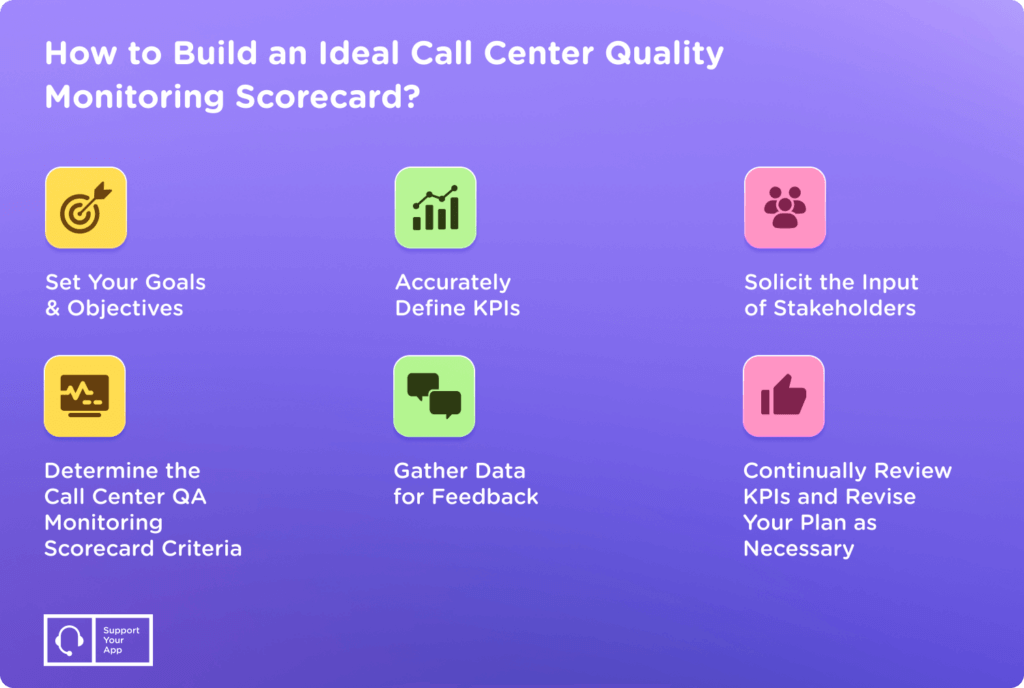
Write the criteria with the people who take these calls every day. Agree on your goals and the KPIs that measure them, then ask team leads which behaviors separate a calm recovery from a call that spirals. Many teams revisit their call center quality monitoring criteria every quarter, since complaint types shift with seasons and product changes.
Questions to Add to the Scorecard
Keep the scorecard short enough that reviewers fill it in carefully, because a long form gets rushed by the tenth call of the day. These questions work well for tense calls and emails:
- Did the agent acknowledge the customer's frustration before explaining the policy?
- Did the agent keep a steady tone when the customer raised their voice?
- Did the agent say what they would do next and by when?
- Was the issue solved correctly on this contact?
- Did the agent escalate at the right moment, when escalation was needed?
- Did the agent leave notes that the next person can act on?
Empathy needs its own line. Upset customers notice quickly when an agent sounds scripted. Score whether the agent used the customer's own words and slowed the pace down. Counting how often someone said "I understand" tells you nothing about whether the customer felt heard.
Tools for Reviewing Tense Calls
No reviewer can listen to every call, so software does the first round of sorting. A quality monitoring call center team usually relies on a mix of tools, each covering a different part of the work. Here's what each one adds when difficult customers are the focus.
Call Recording
Recording is where every review starts. Reviewers can find a specific call and replay the exact moment it turned. Pair the recording with the ticket history. That way the reviewer sees what the customer went through before they reached the agent.
Speech Analytics
Speech analytics listens for patterns across thousands of calls. It can flag raised voices or phrases like "cancel my account," so a supervisor can step in while the customer is still on the line. Treat each flag as a lead, then let a person listen and decide what happened.
Automatic Call Scoring
Automatic scoring rates every call against criteria you choose, such as required disclosures or script steps. It's good for spotting trends across a large queue. A person should still review difficult calls, because software struggles to tell a sincere apology from a scripted one.
Workforce Management Software
Workforce management tools show staffing gaps and missed service levels. They matter for difficult customers more than people expect. Long waits create angry callers, so a scheduling gap at the start of a shift often shows up as a tone problem an hour later.
Metrics That Flag Trouble Early
Individual reviews show what happened on a single call. Metrics show the pattern across the whole team. Track business KPIs alongside customer satisfaction KPIs. A problem that looks like a staffing issue on one dashboard often turns out to be a training issue on the other.
Metrics that reveal how agents handle difficult customers
| Metric | What it shows on difficult contacts |
| First call resolution (FCR) | Low FCR on complaints means customers call back, and they arrive angrier each time. |
| Average handle time (AHT) | Long calls on complaints can mean agents lack the authority to fix the problem. |
| Customer satisfaction score (CSAT) | CSAT on complaint tickets shows whether agents recovered the relationship. |
| Customer effort score (CES) | High effort points to transfers and repeated explanations, both common triggers for anger. |
| Call abandonment rate | Rising abandonment means long waits, which create the next wave of frustrated callers. |
| Escalation rate | A high rate suggests agents need more authority. A very low rate can mean agents are absorbing abuse alone. |
| Agent occupancy rate | Agents with no time between calls carry stress from one conversation into the next. |
| QA score on flagged calls | Shows whether agents follow your standards when it’s hardest to do so. |
Look at these numbers together, not one at a time. Strong CSAT combined with rising occupancy can hide a team that's running out of patience. Call quality monitoring fills that gap, since a reviewer can listen to the calls behind a dip and explain what the numbers alone can't.
Coaching Agents After a Difficult Call
Monitoring only pays off when it changes what agents do on their next call. That means turning review notes into coaching quickly, while the agent still remembers the conversation. The steps below cover what to do with customer feedback and how to coach and protect agents.
Use Feedback From Upset Customers
Surveys from your angriest customers are hard to read and very useful. Watch for repeated phrases like "nobody called me back" or "I had to explain it again." Those comments point to process gaps. Fixing a process prevents more difficult calls than any script change.
Share the themes with the whole team, not only the agents involved. A quality monitoring contact center program that skips survey comments only sees how the agent behaved. The comments show how the customer felt afterward, which is often where the fix starts.
Coach With Recordings
Hold the coaching session within a few days of the call. Play back the moment the conversation turned and agree on one change to try next time. Structured empathy training gives agents language they can use when a customer pushes back hard.
Your reviews should include your best calls as well. A recording of an agent who calmed a furious customer teaches more than any slide deck. SupportYourApp's learning and development solutions build that kind of example into onboarding, so new agents hear good recoveries before their first hard call.
Protect the Agent
Difficult customers take a toll on the people who answer them. A 2025 Modulate report found that 36% of frontline customer service workers had experienced abuse from customers. Give agents a short break after an abusive call and a check-in with their team lead. Customer service call monitoring can also flag agents who've had a run of abusive calls.
How SupportYourApp Handles Quality on Difficult Contacts
Quality monitoring is built into every SupportYourApp engagement, so clients don't need to hire a separate QA vendor. As a provider of call center outsourcing services, we record and review calls, then adjust each consultant's coaching based on what we hear. Customer satisfaction surveys feed back into that training.
For sensitive written replies, our agents use SupportBrain, an AI assistant that drafts replies and summarizes long ticket threads. A human agent reviews and approves every reply before it's sent, which matters when the customer is already upset. Teams using SupportBrain cut average handling time by 60%.
Cardo Systems, which builds communication devices for people on the move, needed multilingual support for customers in the US and Europe. They wanted a partner who could grow the team without losing quality. Our team kept meeting Cardo's KPIs through a large scaling push in 2025, and Cardo now works only with us. Read the Cardo Systems case study.
Summary
Every support team deals with difficult customers, and most tense calls start with a problem you can find and fix. Call center quality monitoring shows you where those problems are and gives you recordings to coach with. If you'd like a team that already works this way, SupportYourApp can build one around your product.