

Your customers message you on WhatsApp, email an hour later, then call because nobody replied, and each time they explain the problem again. This guide is for support and operations leaders comparing the best omnichannel customer service providers for 2027. It compares six partners on channel coverage and AI use, with pricing models side by side.
TL;DR
- Omnichannel support means one conversation history across chat, email, voice, and social, instead of a separate queue per channel.
- Global BPOs bring scale and compliance depth, while smaller specialists move faster and bend more on pricing.
- AI now handles routine requests at most providers, so the path from bot to human matters more than the bot itself.
- The right pick depends on your helpdesk and how much setup work you want off your plate.
Deloitte Digital’s 2026 global contact center survey found that 35% of contact centers already use agentic AI in operations. That changes what companies buy when they shop for omnichannel customer service solutions. The question has moved from headcount to whether AI and human agents share one record of every conversation, on every channel.
What Is an Omnichannel Customer Service Provider?
An omnichannel support partner is an outsourcing company that runs your customer service across chat, email, phone, messaging apps, and social media in one workspace. A customer who starts on Instagram and follows up by phone reaches an agent who already sees the whole thread. That shared context is what separates omnichannel from multichannel.
Multichannel setups give each channel its own queue, often its own team, and the customer repeats the story every time. With omnichannel customer care, routing and conversation history live in one place. If you’re working on the strategy side first, this guide to omnichannel customer engagement covers how brands connect channels before outsourcing them.
How We Evaluated These Providers
We compared each provider on six criteria that decide whether an outsourced omnichannel team works day to day. The research drew on each company’s public materials, published channel lists, and pricing pages where they exist. We didn’t try to crown one winner, because a fintech scale-up and a Shopify brand need different things.
- Channel coverage: which channels the provider staffs, and whether they share one customer history.
- Workflow reliability: routing, escalation paths, QA, and how the team holds service levels during volume spikes.
- AI and human balance: what AI resolves on its own, when a person steps in, and how fast that handoff happens.
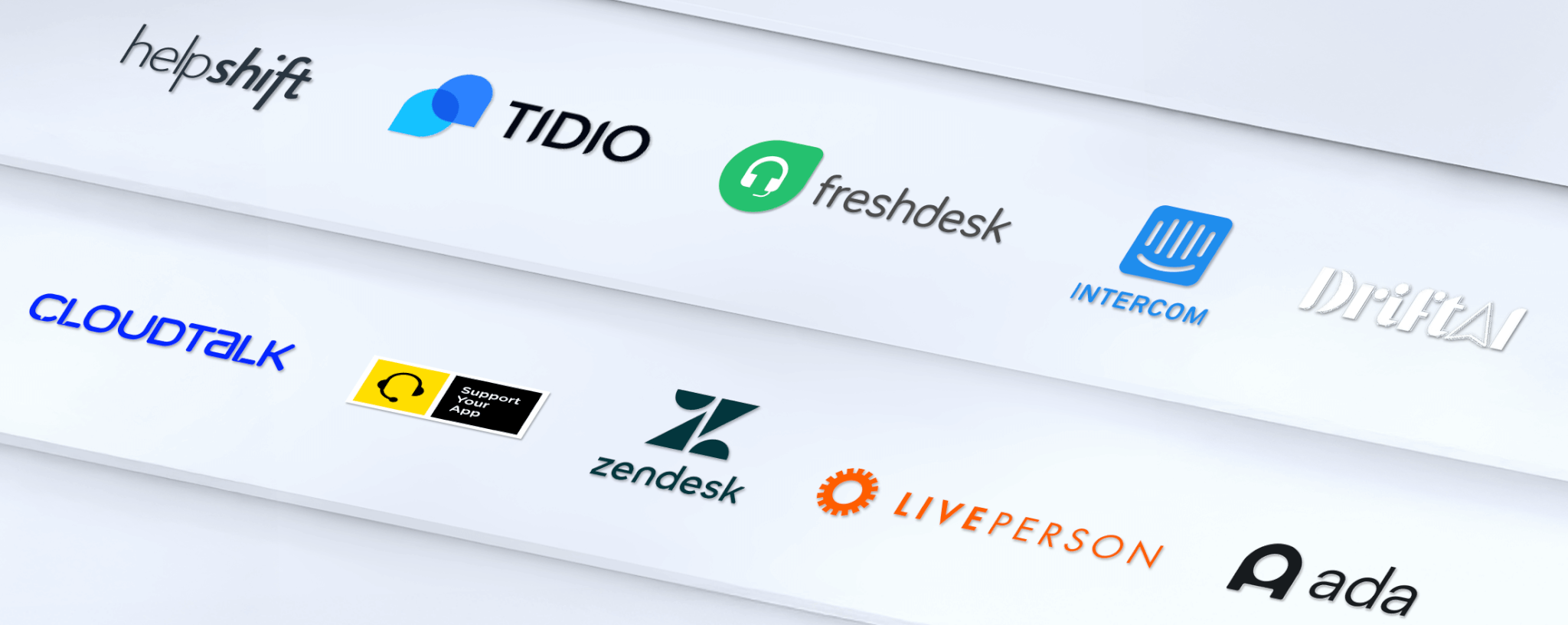
- CRM and helpdesk integrations: whether agents work inside your Zendesk, Intercom, or Freshdesk setup instead of a separate tool.
- Scale and security: headcount, delivery regions, and certifications such as ISO/IEC 27001, PCI DSS, or HIPAA.
- Pricing model: monthly plans, per-hour or per-agent billing, or custom quotes, and how clear the provider is upfront.
The AI criterion got extra weight. Qualtrics’ 2026 consumer trends research found that 53% of consumers worry AI support poses privacy risks, and half miss the human touch it replaces. Providers that put AI on routine work and keep trained agents on sensitive cases scored higher than those leading with automation alone.
Omnichannel Customer Service Providers Compared
Here’s a side-by-side look at the best omnichannel customer service providers 2027 has to offer, based on public company information. Pricing for the large BPOs is quote-based, so the table shows the model instead of a rate. Treat the channel lists as a starting point and confirm coverage for your markets during scoping calls.
| Provider | Channels | AI support | Pricing model |
| SupportYourApp | Email, chat, voice, messengers, social | AI agents for routine work, humans for complex cases | Custom quote |
| Helplama | Email, chat, phone, social, WhatsApp | Human-led teams with dedicated QA | Monthly fee |
| TELUS Digital | Voice, chat, email, social | Voice AI alongside frontline care teams | Custom quote |
| Alorica | Voice, chat, email, social | AI tools, including live voice translation | Custom quote |
| Teleperformance (TP) | Voice, chat, email, social | In-house AI tools at enterprise scale | Custom quote |
| TTEC | Voice, chat, email, social | CX technology through TTEC Digital | Custom quote |
Omnichannel Providers Reviewed
This list of the best omnichannel customer service providers mixes one mid-sized specialist, one budget option, and four global BPOs. Each review covers where the provider fits and where it fits less well.
1. SupportYourApp
SupportYourApp is a customer support outsourcing company founded in 2010, with a team of 2,000+ and 300+ clients in 30 countries. Its agents cover 120+ languages from 8 international hubs, 24/7. The company is ISO 27001:2022 and PCI DSS Level 1 certified, CCPA, GDPR, HIPAA, and PDI DSS Level 2 compliant. SupportYourApp bills pay-per-seat or pay-per-result and -minute, so it fits companies with steady ticket volume as well as those that spike around launches or holidays.
For NotaryPublic24, a remote notarization platform, the team set up Intercom to connect chat, email, WhatsApp, and calls in one workspace. The NotaryPublic24 case study shows a 64% faster average resolution time, with requests resolved monthly rising from 1,800 to 4,500.
- Best for: SaaS, fintech, and ecommerce companies that want human agents and AI agents from one partner.
- Watch for: pricing is quote-based, so you’ll need a scoping call before you see numbers.
2. Helplama
Helplama is an outsourcing company built for small businesses, ecommerce brands, and SaaS startups. It combines U.S.-based and global talent, covers 60+ languages, and assigns a dedicated QA specialist to accounts. The monthly plan suits stores with steady ticket counts, while per-minute phone pricing fits brands whose call volume jumps during sales seasons.
- Best for: smaller ecommerce and SaaS teams that want fast setup and predictable monthly costs.
- Watch for: AI automation isn’t a headline feature, so routine requests stay with human agents.
3. TELUS
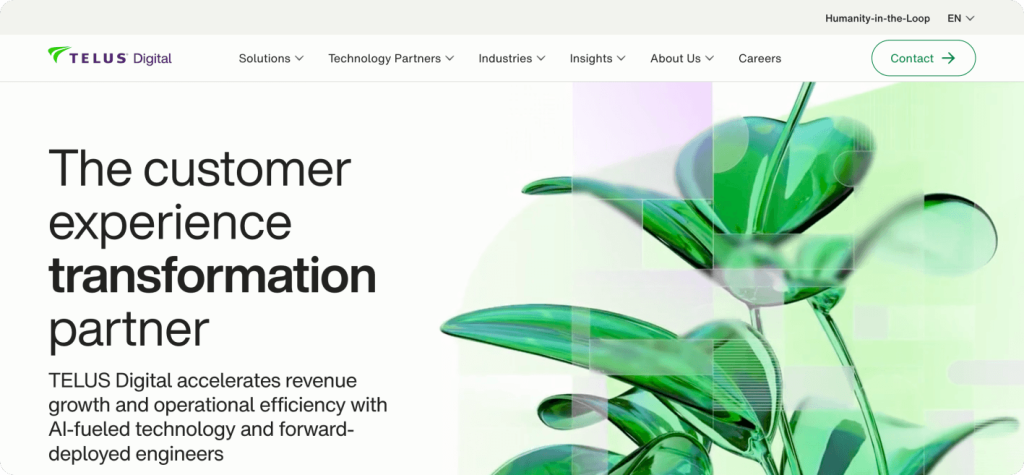
TELUS Digital, the customer experience arm of Canadian telecom company TELUS, reports 82,000+ team members in 35+ countries and support in 60 CX languages. In May 2026, it opened new delivery sites in Asia-Pacific and Argentina. It has also partnered with ElevenLabs to run voice AI alongside its frontline care teams. Pricing comes as a custom quote with no public rates, which suits enterprises running large programs across several markets and languages.
- Best for: enterprise brands in gaming, travel, and tech that need multilingual digital CX.
- Watch for: enterprise-style contracts and onboarding can feel heavy for mid-sized teams.
4. Alorica
Alorica is a California-based CX outsourcer with a workforce of roughly 100,000 people and support in 75+ languages. Its offering includes live, two-way voice translation, which helps when one team covers many markets. In the first half of 2026, Alorica hired more than 8,000 people across Egypt, India, and the Philippines. The company quotes every program individually with no public rate card, which fits large buyers that can commit to steady, predictable volume.
- Best for: high-volume programs where cost per contact and global throughput matter most.
- Watch for: custom workflows may need extra governance on your side to stay consistent across sites.
5. Teleperformance
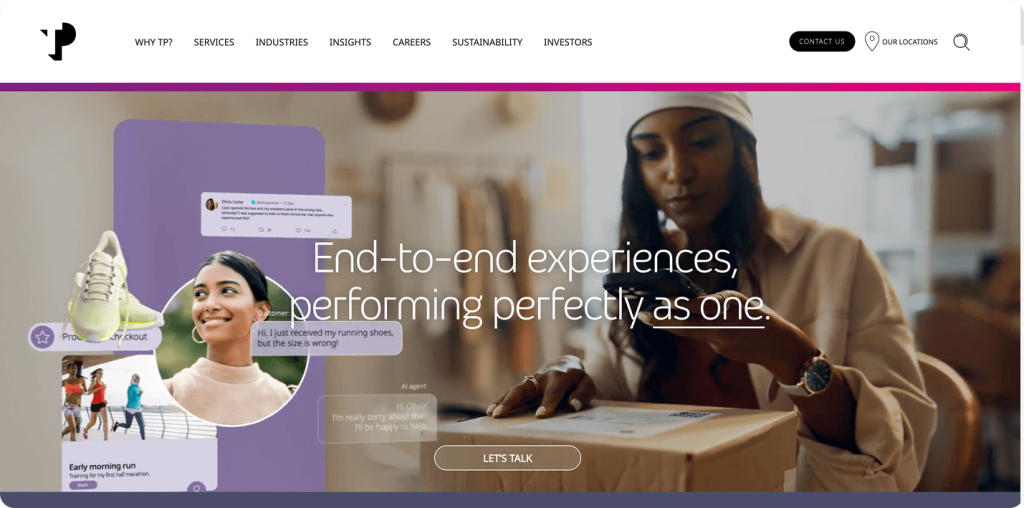
Teleperformance, now branded TP, is the largest company on this list, with nearly 490,000 employees in 100 countries at the end of 2025. TP has deep compliance experience in healthcare and financial services, and its size lets it absorb large seasonal surges. This provider is moving more of its work to outcome-based deals, which fits enterprises that want to pay for results instead of agent hours.
- Best for: global enterprises in regulated industries that need surge capacity across regions.
- Watch for: large-company process layers can slow down small changes to scripts or workflows.
6. TTEC
TTEC runs two businesses: TTEC Engage, which delivers outsourced customer care, and TTEC Digital, which builds contact center technology. Its 2025 annual report lists about 51,000 employees in 22 countries, serving more than 720 clients. That pairing suits companies that want one partner to redesign the tech stack and staff it. TTEC doesn’t publish a rate card, so expect a custom quote, which fits enterprises with a procurement team ready to run a full vendor review.
- Best for: regulated companies that want workforce management maturity and CX consulting from one vendor.
- Watch for: change requests can move slowly through a large account structure.
What to Look for in an Omnichannel Customer Service Provider
Start with your channel mix and your helpdesk, then judge every provider against them. Ask which channels the provider staffs today with trained agents, not which ones it could add later. Then ask whether its agents work inside your CRM. If you’re still choosing software, this list of the best omnichannel CRM tools helps you settle that first.
Next, test the handoff between AI and people. Ask what share of requests AI resolves without a person, how escalation works, and who owns quality checks. Strong omnichannel solution providers will show you sample transcripts and QA scorecards from a live account.
Finally, check security and contract terms. Compliance like GDPR, CCPA, and PCI DSS matter if you handle payments or personal data. Ask for a pilot period, clear SLAs per channel, and a notice period you can live with. Teams evaluating omnichannel customer service solutions often skip the exit terms, which is where early-termination fees usually show up.
Why Choose SupportYourApp
SupportYourApp fits companies that want human agents, AI agents, and the workspace connecting them from one partner. SupportCRM, a proprietary AI powered CRM system, gives agents one inbox for email, voice, and chat, so conversation history stays in one place. SupportResponse, an agentic AI agent, resolves routine requests on chat, email, and messengers around the clock and escalates complex cases to a human agent. It reaches 80% autonomous resolution, which frees human agents for the conversations that need judgment.
As an omnichannel BPO, SupportYourApp also works inside the helpdesk you already run, such as Zendesk. You can see how the team structures omnichannel customer support for SaaS, fintech, and ecommerce companies.