


This guide is for dental practice owners and office managers who find a row of missed weekend calls in Monday's call log. It explains what an AI dental receptionist answers, which calls it passes to your team, and what to check before you sign up.
TL;DR
- Missed calls usually turn into lost bookings, because most callers try the next practice instead of waiting for a callback.
- An AI receptionist books and reschedules visits at any hour, and it answers only from information your practice approves.
- Clinical questions, urgent pain, and upset patients still go to a person, so the handoff rules matter as much as the booking.
- Your front desk stays, and it spends less time on hold music and more time with the patient standing at the counter.
What an Unanswered Call Costs a Dental Practice
An unanswered call costs a dental practice the appointment that call would have booked, and often every recall visit after it. Patient Prism analyzed 11.5 million dental calls from 2025. In that data, 31% of callers hung up before they reached anyone at the front desk.
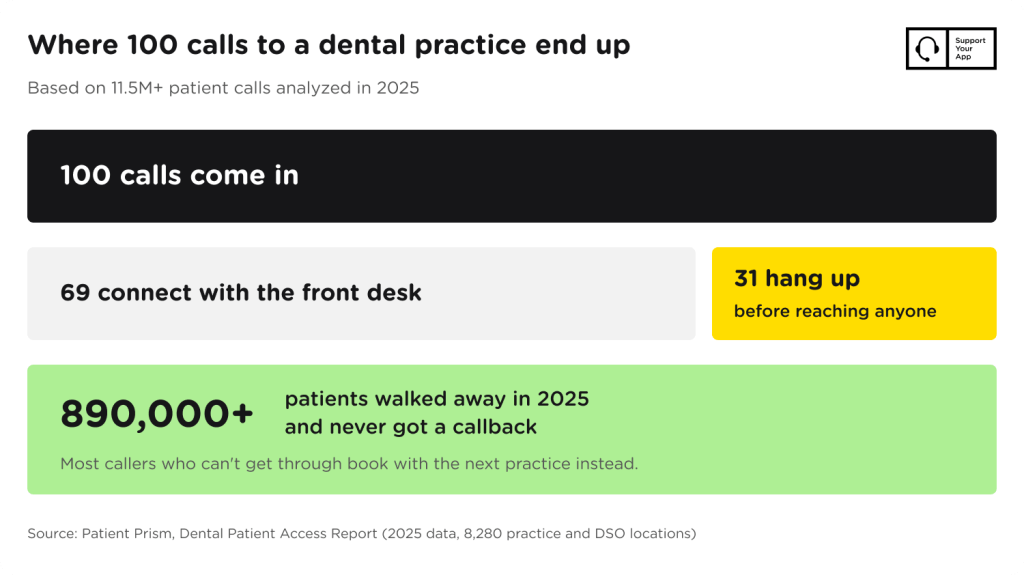
Most of those callers don't wait for a callback. The same report counts more than 890,000 patients who walked away in 2025 and never heard back from the practice. A new patient with a chipped crown doesn't keep redialing one number. They search again and book with whichever office picks up first.
That lost booking keeps costing money long after the call ends. A new patient who books a cleaning tends to come back twice a year and accept treatment later. One missed Saturday call can send years of recall visits down the street. An AI dental receptionist pays off on exactly those calls.
Why the Front Desk Can't Answer Every Call
The front desk misses calls because the people answering the phone are also checking in patients and collecting payments at the counter. When a patient is standing in front of them, the ringing line waits. Most receptionists make that choice correctly, but the caller on the other end doesn't see it.
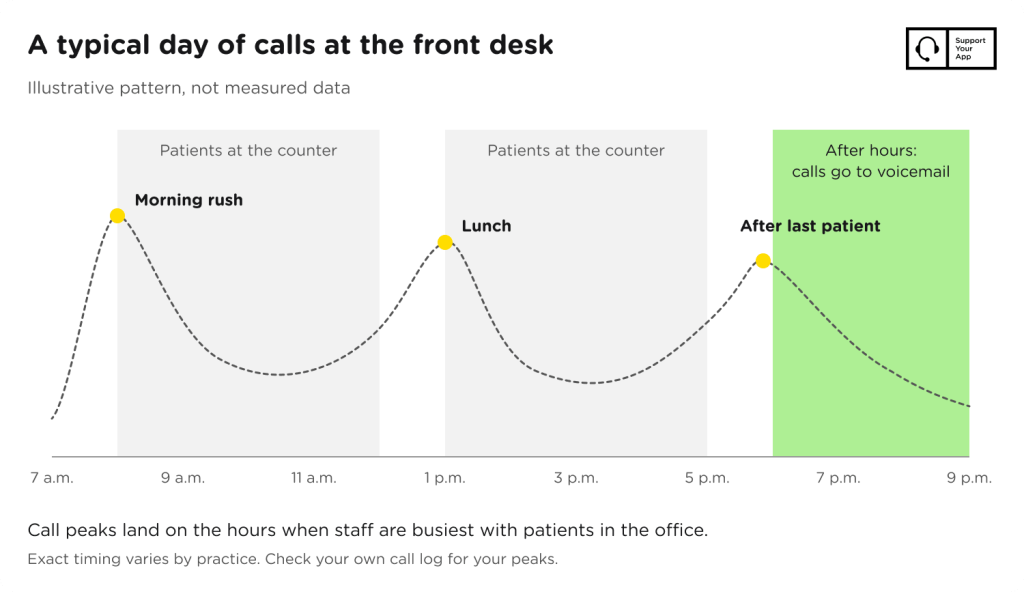
The phones ring hardest before the first appointment, over lunch, and right after the last patient leaves. One caller with a long insurance question can tie up the line while two more calls roll to voicemail. After hours, every call goes there unless someone is paid to stay late.
Hiring more people isn't easy either. In late 2024 polling by the ADA Health Policy Institute, about 3 in 5 dentists said they worry about recruiting and retaining staff. When a receptionist calls in sick, the remaining team covers the counter first and the phone second.
An AI receptionist for dental office teams picks up the overflow and after-hours calls that the counter can't take. The front desk keeps every call it can handle, and the AI agent answers the rest instead of letting them ring out.
What a Dental AI Receptionist Handles
The AI agent handles the routine calls that fill most of a receptionist's phone time. It works from your schedule and your approved answers, and it doesn't put anyone on hold. It typically takes these calls off the front desk:
- New appointments, booked into open slots in your practice management system while the caller is still on the line.
- Rescheduling and cancellations, so a patient can move a cleaning and the freed slot goes back on the schedule.
- Hours, address, parking, and directions, which staff otherwise answer many times a day.
- Questions covered by documents your practice approves, such as accepted insurance plans, new-patient forms, and payment options.
The approved documents set the limits. A dental AI receptionist reads only from the answers you sign off on. When a question falls outside them, it says so and routes the call. It doesn't guess about coverage or invent a policy, which keeps the answers consistent from one call to the next.
Some vendors build this into the tools a practice already runs. A-dec's Link AI, for example, brings calls, texts, emails, and web chats into one inbox the front office works from. The setup differs by vendor, so ask how each AI receptionist for dentists connects to your scheduling software before you compare prices.
Which Calls Go to Your Team
Clinical questions, urgent symptoms, and upset callers go to a person on your team. The AI agent shouldn't try to judge whether pain or swelling is serious, and it shouldn't argue with a frustrated patient. Your practice decides the transfer rules during setup, and the agent follows them on every call.
Most practices split incoming calls between the AI agent and the team along the lines in this table.
| Call type | Who takes it | What happens |
| New patient booking | AI agent | Books an open slot |
| Rescheduling a cleaning | AI agent | Moves the visit, frees the old slot |
| Insurance plan question | AI agent, then team | Approved list first, specifics to staff |
| Pain, swelling, or bleeding questions | Your team | Transfer to clinical staff |
| Broken tooth after hours | Your team | On-call dentist, per your protocol |
| Billing dispute or angry caller | Your team | Warm transfer with a call summary |
Urgent cases need the clearest rules. After hours, a good setup reads your dentist's approved instructions and connects the caller to the on-call dentist. The agent tells anyone whose swelling affects breathing to call 911 first. The dental AI receptionist never offers its own medical opinion.
If a caller asks for a person or keeps repeating the same request, the agent transfers the call. A warm transfer passes along the caller's name and reason for calling, so the patient doesn't have to explain everything twice.
Could AI Dental Receptionist Replace Your Front Desk?
Your front desk stays, because most of its work happens with patients in the room, not on the phone. Someone still has to calm an anxious patient at check-in and walk a family through a treatment plan and its cost. Those conversations need a person who can read the room.
What changes is where receptionists spend their hours. With the AI agent taking routine bookings, the team gets time back for claims follow-up and the patients in front of them. Complex calls still reach them, and they arrive with context instead of as a cold voicemail.
Some practices want people on the phone as well. An outsourced receptionist service puts trained receptionists on overflow lines, and they can take the calls the AI agent passes on. That mix suits an AI receptionist for dental office teams that are small but busy.
How much does an AI receptionist cost for a dental practice?
The cost depends mostly on how many minutes of calls the AI answers each month and how much setup the vendor includes. AI dental receptionist pricing usually comes as per-minute billing, a per-call fee, or a flat monthly plan with a minute cap. Integration with your practice management system can add a one-time setup fee.
To compare options, add up your monthly call minutes, your after-hours call count, and the hourly cost of the staff time those calls take today. Then ask each vendor for a quote based on those numbers. For a sense of what an AI phone receptionist includes, check the features against your own call mix.
Choosing an AI Receptionist for Dentists
Every call to a dental practice is a chance to book a patient, and the missed ones go to the next office on the list. An AI agent answers the routine calls at any hour, while clinical and urgent calls go straight to your team. The front desk keeps the work that needs a person in the room.
Start with your own call log and count how many calls ring out, and when. Then set the handoff rules before you pick a vendor. If you're comparing tools across industries, this roundup of the best AI receptionist for small business covers the features worth checking first.
Getting Started With an AI Receptionist for Dental Clinics
A short review of your call volume and peak hours shows where an AI agent fits and where people still need to answer. SupportYourApp runs reception desk services with trained receptionists and AI phone coverage, and the team can walk you through the options.