
If you run a travel agency, you know the pattern well. Summer holidays and every wave of flight cancellations push call volumes up, and then the quiet months leave agents waiting for the phone to ring. This guide shows how travel agency call center services help you absorb those spikes. You'll see what to plan ahead and when outsourcing beats hiring a team you only need for a few months.
Key Takeaways
- Travel support never grows evenly. Holidays and disruptions pile onto the same phone lines at once, and a team sized for March can't cope in July.
- In-house teams hit the same walls every peak season: hiring costs, agent turnover, language gaps, and staff who've never handled a crisis.
- Forecasting, smart scheduling, callbacks, and AI for repetitive questions take pressure off agents well before the rush begins.
- An outsourced partner can add trained, multilingual agents for the peak and scale back afterward, so you pay for coverage only when you need it.
What Travel Agency Call Center Services Cover
In Perk's 2025 travel disruption report, 89% of business travelers said a work trip hadn't gone to plan in the past 12 months. Each of those trips can turn into a phone call, often late at night, from someone who needs a fix right away.
Agents in the travel industry help people plan trips and sort out problems before and during the journey. Most of their day falls into a handful of request types:
- Booking help for flights and hotel stays.
- Concierge-style changes, like moving a hotel reservation or rebooking a missed flight.
- Emergency help when luggage goes missing or a traveler falls ill abroad.
- Support in the traveler's own language, whatever country they come from.
- Round-the-clock availability, because travel problems don't keep office hours.
- Mediation between travelers and hotels or airlines, since agents often see both sides of a booking and can settle disputes faster.
Outsourcing this work lets tour operators and agencies focus on growing the business instead of staffing phones. Travelers expect quick, competent answers, and outsourced agents train for exactly that. A partner also takes care of hiring and shift coverage, while your own team works on new routes and partnerships.
Why Seasonal Spikes Challenge In-House Call Centers
Call centers see two main kinds of volume spikes. Seasonal peaks follow holidays and annual events, while sudden surges come from promotions or outside events like storms and strikes. Travel faces both, often at the same time. That's why peak periods need careful planning and trained people who can work through a full queue without losing patience.
Technical issues add to the load. With more people booking through websites and apps, online travel agency call center services now handle more tech problems, from failed payments to app errors. Those calls need agents who understand booking platforms. That's why many agencies treat IT support for the hospitality industry as part of the same plan.
SupportYourApp builds outsourced travel support teams around each client's peak calendar and booking tools. The setup follows the same order every time.
Start With Your Support Needs
We start by mapping what the client's travelers need, then hire and train around it. That usually covers:
- language and regional coverage
- hiring profiles, such as tourism experience or fluency in several languages
- flexibility for seasonal peaks
- 24/7 availability for travelers in every time zone
- cultural fit and empathy training
Back Up and Recover Booking Data
Our agents are tech-savvy and know how to recover booking information if a system fails mid-season. A crashed reservation tool doesn't leave travelers stuck without answers while your engineers fix it.
Protect Payment and Personal Data
Travel agencies handle credit card details and personal data every day. SupportYourApp is GDPR-compliant and holds PCI DSS Level 1 Service Provider certification, so our teams can work with that data safely. Every device our consultants use runs VPNs, Data Loss Prevention (DLP) systems, Mobile Device Management (MDM) tools, and other security controls.
In-House Call Center Challenges for Travel Agencies
An outsourced contact center usually copes with seasonal spikes better than an in-house team. The reasons show up in the problems in-house teams face every peak season, year after year.
High Costs of Running In-House
Running an in-house contact center means paying for salaries, training, benefits, and infrastructure all year, even in months when the phones stay quiet. For small and medium agencies, call center outsourcing removes that overhead and frees money for core work.
SupportYourApp offers travel support with omnichannel coverage and multilingual agents. Our teams train for everything from a missed connection to a full cancellation wave, and they handle payment data under the certifications above.
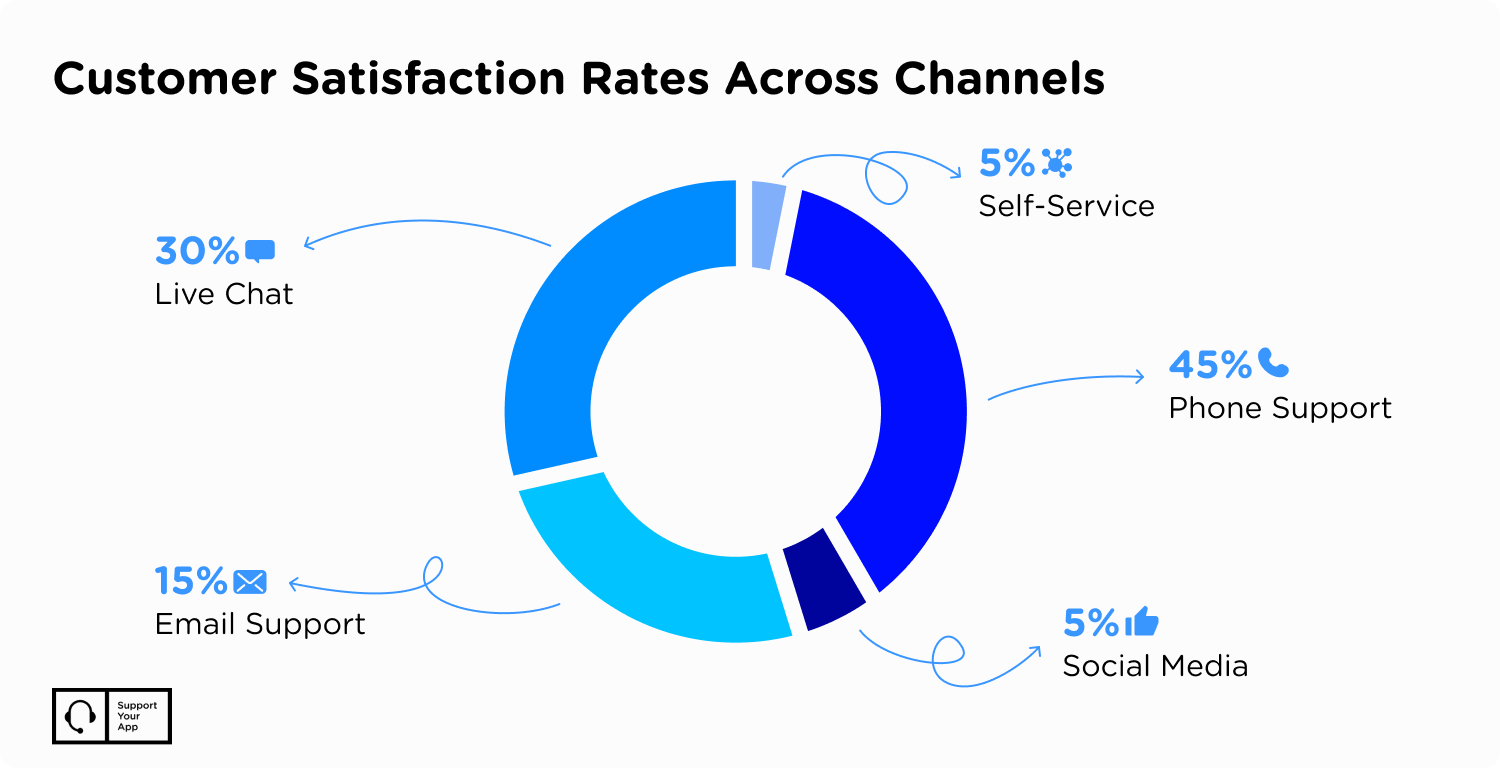
The chart below compares customer satisfaction across support channels. Phone holds up well, yet travelers also reach out by chat, email, and messengers. A phone-only setup leaves gaps that an omnichannel team can close.
Employee Turnover and Talent Retention
Poorly managed call centers often struggle with low morale, which pushes turnover up and training costs with it. Every agent who leaves takes product knowledge with them. Customers feel the difference in slower, shakier answers, and satisfaction scores drop.
With an outsourced travel call center, keeping agents motivated becomes the partner's job. Dedicated recruitment teams and retention programs keep experienced people on your account. You also stop paying to train replacement hires every few months, and those savings add up over a year.
Scaling for Peak Season
Scaling is the toughest problem for small in-house teams. Hiring for July in May rarely works, and letting people go in September hurts morale. An outsourced provider can add or remove agents as demand moves without letting quality slip. That flexibility is the main reason agencies buy travel agency call center services in the first place.
Flibco, a European airport shuttle service, faced this exact pattern. Requests climbed hardest before the holidays, so SupportYourApp analyzed the team's workload and recommended a fully dedicated team. Both sides made the switch over two months, and the new 24/7 bilingual team was ready before peak season started.
If you're comparing partners, our 20-step checklist for choosing a customer service provider covers seasonal flexibility and long-term fit.
Language and Cultural Barriers
Travel agencies talk to customers from dozens of countries, so clear communication depends on language skills and cultural know-how. Smaller agencies rarely have the budget to train staff across several languages. An outsourced travel agency call center closes that gap with multilingual support in each traveler's native language. Nobody should have to explain a lost passport in their third language.
Labor Laws Across Countries
Many travel companies avoid opening local offices because each country brings its own labor and data rules. SupportYourApp takes that work off their hands. We manage hiring compliance, regional payroll, benefits, and taxes for our agents, along with GDPR, CCPA, and local labor law requirements.
Crisis Response and Disruption Management
Flight cancellations, natural disasters, political unrest, and sudden travel restrictions all need a trained response. Few travel companies can afford that kind of training for an in-house team. Outsourced call centers usually bring:
- crisis-trained teams with escalation protocols for emergencies
- extra agents on short notice during storms, power outages, cyberattacks, or other global disruptions
- 24/7 backup staffing across continents
6 Strategies to Prepare for Peak Travel Seasons
Contact center managers can't afford to get caught off guard by seasonal spikes. Knowing a peak is coming isn't enough, though. Forecasting and early training turn a chaotic rush into a busy but manageable one, especially with an experienced outsourced team behind you.
Forecasting
Forecasting means studying past call data to predict your busiest weeks and staff up before they arrive. Track incoming calls all year, not just during the rush. The more history you collect, the more accurate next season's plan becomes, and the fewer travelers end up stuck in a queue.
Workforce Management and Smart Scheduling
BPO providers use workforce management (WFM) tools to:
- build agent shift schedules around forecasted peak times
- automate shift swaps, breaks, and overtime rules
- match staffing to call, chat, and email patterns across time zones
AI and Self-Service for Repetitive Questions
During peak season, many travelers ask the same questions about baggage rules, check-in times, or refund status. An AI agent and a clear FAQ page let them find those answers on their own, without waiting in a queue for a two-line reply.
SupportResponse, SupportYourApp's autonomous AI agent, answers routine chat and email requests 24/7 from your knowledge base. It hands complex cases to a human, which leaves your agents free for the problems that need a person.
Callback Service
Instead of leaving travelers on hold, offer them a callback. It cuts the time people spend staring at a hold screen and takes the edge off their frustration, so even a long queue feels manageable.
Customer Feedback
Customer feedback shows you where travelers got stuck. Use it to fix weak spots in scripts and processes before the next peak, so the same complaint doesn't come back every July.
Post-Peak Debrief
After each peak, call center managers should:
- review what went well and what didn't
- share the data with the client to adjust the plan for the next cycle
- update training, scripts, and automations
Benefits of Outsourcing Call Center Services for Travel Agency Teams
More people travel every year, and that growth keeps third-party support in steady demand, especially during holiday peaks. Agencies need partners who can answer questions fast during the rush without letting satisfaction drop.
Cost-Effectiveness
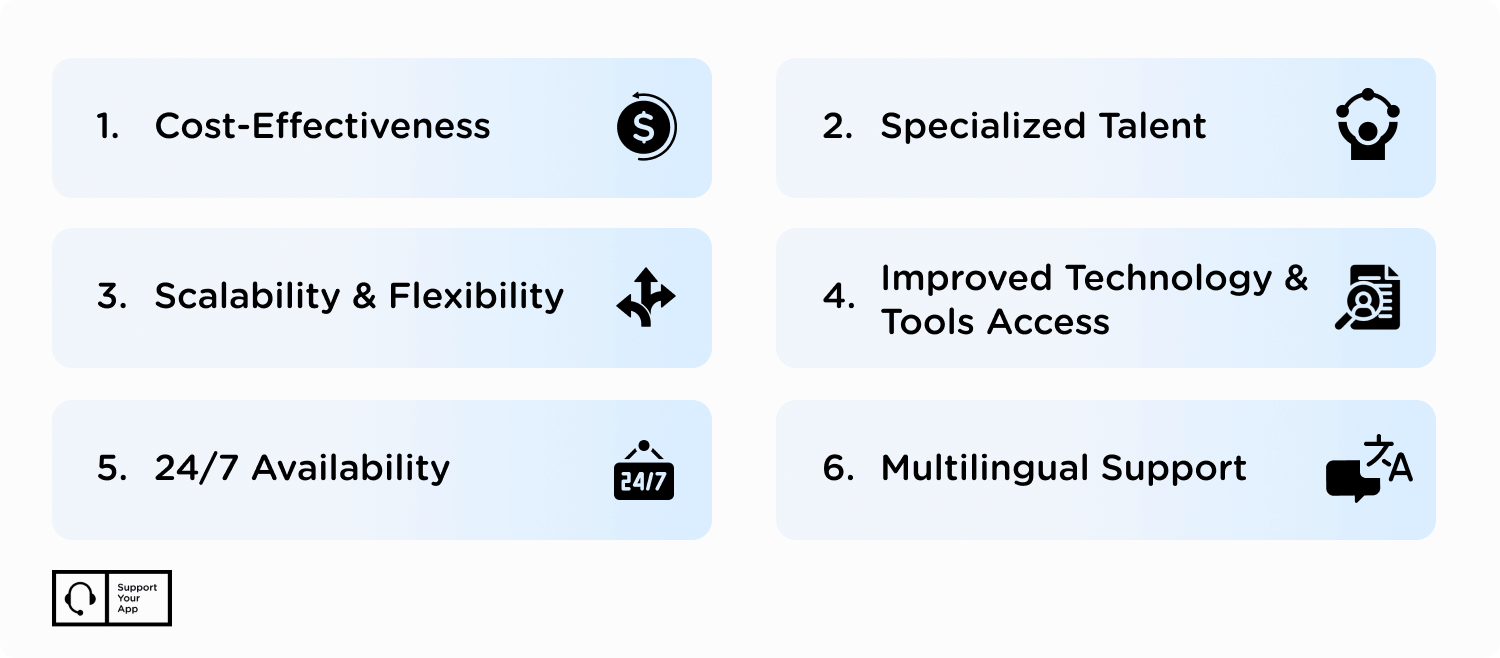
Outsourcing cuts operating and infrastructure costs. Instead of building an in-house setup, you pay a specialized provider for the coverage you use and skip the equipment and hiring overhead.
Specialized Talent
You get agents who know the travel industry and stay current on support best practices through regular training. They've handled rebookings and refund disputes before, so they ramp up faster than new in-house hires.
Scalability and Flexibility
Travel peaks bring a sharp jump in questions and support needs. Flexible staffing is where travel agency call center services earn their fee. A good provider adjusts headcount quickly and moves agents between queues, so swings in call volume don't disrupt service.
Access to Better Tools
Outsourced providers often bring enterprise-level tools you'd otherwise have to buy yourself. SupportYourApp gives travel clients access to:
- CRM and ticketing systems such as Zendesk, Salesforce, Jira, Aircall, and Intercom
- SupportVoice, an AI voice agent that answers routine inbound and outbound calls 24/7 and passes complex ones to a person
- workforce management tools for scheduling and forecasting
We can also provide consultants experienced in:
- GDS platforms (Amadeus, Sabre, Galileo)
- online booking tools, CRM systems, and reservation engines
- loyalty program workflows and OTA integrations
24/7 Availability
Travelers want to reach someone at any hour, because a problem at midnight feels much worse in a foreign airport. Outsourced call centers give them fast help after hours. That makes the whole trip easier to enjoy and keeps a bad night from turning into a bad review.
Multilingual Support
Travel agencies serve customers from many languages and cultures. When agents help travelers in their own language, the experience feels easier and more personal. Those travelers come back, and they recommend you to friends.
Summary: Getting Your Travel Agency Call Center Ready for Peak Season
Travel demand has come back strong since the pandemic. UN Tourism estimates 1.52 billion international tourist arrivals in 2025, almost 60 million more than in 2024. Each trip can bring a booking question or an emergency call, and peak months stack them together.
In-house teams often buckle under that surge. Training costs, turnover, and language gaps all bite when demand peaks, and travelers notice the slower answers right away.
An outsourced partner brings trained agents, forecasting, callbacks, and performance monitoring to keep service steady through peak volume. If you're weighing call center services for travel agency growth, look for cost efficiency, multilingual agents, and flexible scaling. Add 24/7 coverage to that list, and your own team can stay focused on the business itself.