


With weeks left until Christmas, the peak season's surge in support queries is already here. Customer service agents typically handle 22% more sessions per week during the busiest shopping period, facing anywhere from 160 to 195 interactions per agent.
The challenges faced during these rush periods can make or break your holiday ecommerce customer service efforts, with customer expectations being higher now than at any other time of the year. Even minor delays or missteps can quickly turn into lost sales or frustrated shoppers. This emphasizes the need for ecommerce holiday readiness in support teams.
A proactive approach is the only way to ensure a high CSAT score during the demand spikes.
In this article, we will explore six holiday support mistakes to avoid and show you how to improve ecommerce customer experience by following some easy-to-implement support solutions. You’ll be well-equipped to craft your own successful holiday ecommerce strategy.
Key takeaways:
- Insufficient agents and poor training lead to slow responses, mistakes, and decreased customer satisfaction.
- Weak internal communication causes inconsistent information and cross-departmental delays that frustrate customers.
- Outdated CRM systems and resistance to AI reduce efficiency, increase workloads, and create avoidable errors.
- Personalization is essential — customers expect tailored support, and generic interactions damage loyalty during the peak season.
- Avoiding AI limits efficiency and scalability; without chatbots, automation, and self-service tools, support teams face heavier workloads, slower responses, and missed opportunities to improve customer experience.
- No backup agents to reinforce the team in case there is a need. Bench players are good to have.

eCommerce Holiday Support: Mistakes to Avoid
David Eberle, cofounder and CEO of Typewise, has mentioned:
“Seasonal inefficiencies are really year-round inefficiencies in disguise”.
With that in mind, the pressures of holiday shopping in retail tend to magnify issues that have been present all year. This makes ecommerce holiday planning and early fixes essential to prevent problems when the season hits its peak.
Below, we’re going to cover the most common holiday ecommerce customer service mistakes and tips to avoid them. But, make sure to also check out these latest best practices that leading brands use to build loyalty.
Mistake #1. Insufficient Team Members
The biggest mistake you can make is being ill-prepared for the volume of support queries you will face during the peak season. With order tracking and shipping delays query spikes, your team will need to be large enough to accommodate this influx.
According to a shipping industry report tracking holiday ecommerce trends, it is estimated that 10-12% of packages are at risk for delay during the 2025 holiday season. This is higher than the 7-10% observed in 2024.
Small teams can easily become burdened by WISMO - "Where is my order" queries that accompany the holiday sales. This challenge can lead to agent burnout and a negative CX, which can be avoided with the correct preparation and scaling.
Sufficient staffing can help ensure:
- Faster response times
- Fewer mistakes
- More satisfied customers and boosted loyalty
- Improved workflows and a lower chance of burnout
Additionally, AI tools integrated with delivery and order platforms can greatly expand support coverage and improve overall capacity.
If you are late, quick implementation of no-code AI chatbots like Quidget can be an immediate response to the spike and provide your customers with the support they need. These types of tools don't need a developer, just your ten minutes to set up.
Key Takeaway
Holiday order delays and WISMO spikes can overwhelm small support teams, making preparation and proper staffing essential. Scaling ahead of peak season and using AI tools will help you prevent agent burnout, reduce errors, and protect the customer experience.
Mistake #2. Inadequate Training
When support teams are thrown into the holiday rush without proper training, the results are usually chaotic.
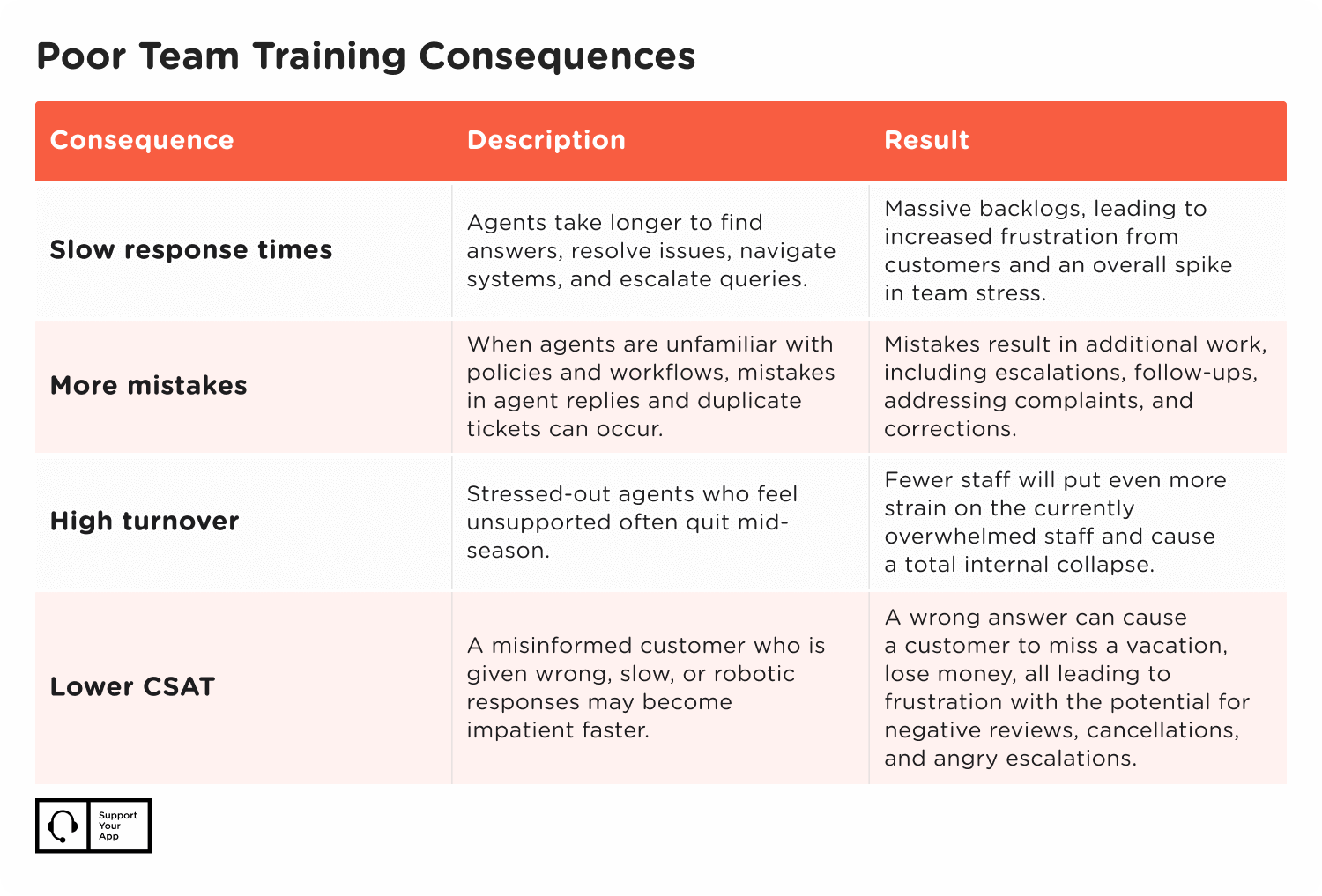
Here are the negative consequences that the poor support team training can entail.
Poor Team Training Consequences
Integration of an AI chatbot for a CS team can mitigate some gaps in the agents’ knowledge base as the agent can get advice on how to reply from an AI assistant, like Quidget, for example.
Key Takeaway
Inadequate training turns the holiday rush into chaos, slowing agents down, increasing errors, and driving burnout. Without proper preparation, you can face backlogs, turnover, and a sharp drop in CSAT.
Mistake #3. Poor Internal Team Communication
The holiday season ecommerce customer service is already a high-pressure environment. When internal communication breaks down, the entire customer experience suffers.
Communication breakdown can range from inconsistent information, assumptions leading to misunderstandings, and delays in problem awareness. This can easily result in cross-departmental frictions and reduced team morale.
A well-known example of holiday miscommunication occurred when Best Buy continued to promote guaranteed Christmas delivery even as their warehouses were becoming overwhelmed. Internally, teams were aware that fulfillment deadlines had shifted, but this update never reached customer support — who kept reassuring shoppers that their orders were on track. Days before Christmas, the company was forced to cancel thousands of orders, leaving customers furious and unprepared to find alternatives.
Key Takeaway
When communication breaks down across teams, even small misalignments can snowball into major holiday ecommerce customer service failures. Keeping support fully informed is key to preventing misinformation, customer frustration, and costly last-minute crises.
Mistake #4. Inefficient CRM Systems
Inefficient CRM systems can seriously damage ecommerce holiday support. In fact, companies implementing an efficient CRM platform can experience up to a 47% growth in customer retention and trust.
However, a slow, outdated, or cluttered system forces agents to spend unnecessary time searching for information, leading to longer response times. When systems fail to sync data accurately or lack true omnichannel capabilities, customers may need to reach out repeatedly, and essential tasks like refunds or exchanges can fall through the cracks entirely.
Increased demand surges may even cause the system to crash altogether, wreaking havoc on integrations with shipping, payment, and inventory systems. An inefficient platform may also have no automation to speak of, which leads to staff burnout and low quality of responses.
Key Takeaway
Outdated CRM systems slow agents down, create repeat contacts, and cause critical tasks to fail — all of which can severely damage holiday CX. Investing in an efficient, well-synced CRM is essential to maintaining speed, accuracy, and customer trust during peak season.
Mistake #5. Avoiding AI
AI has become a major part of business across industries, and customer service is no exception. Businesses that refuse to adopt AI — self-service options like or AI chatbots — are hindering their own growth.
One of our biggest holiday ecommerce tips to you would be to embrace AI and fully explore how the technology like AI voice agents can help your customer support thrive.
AI automation can help with:
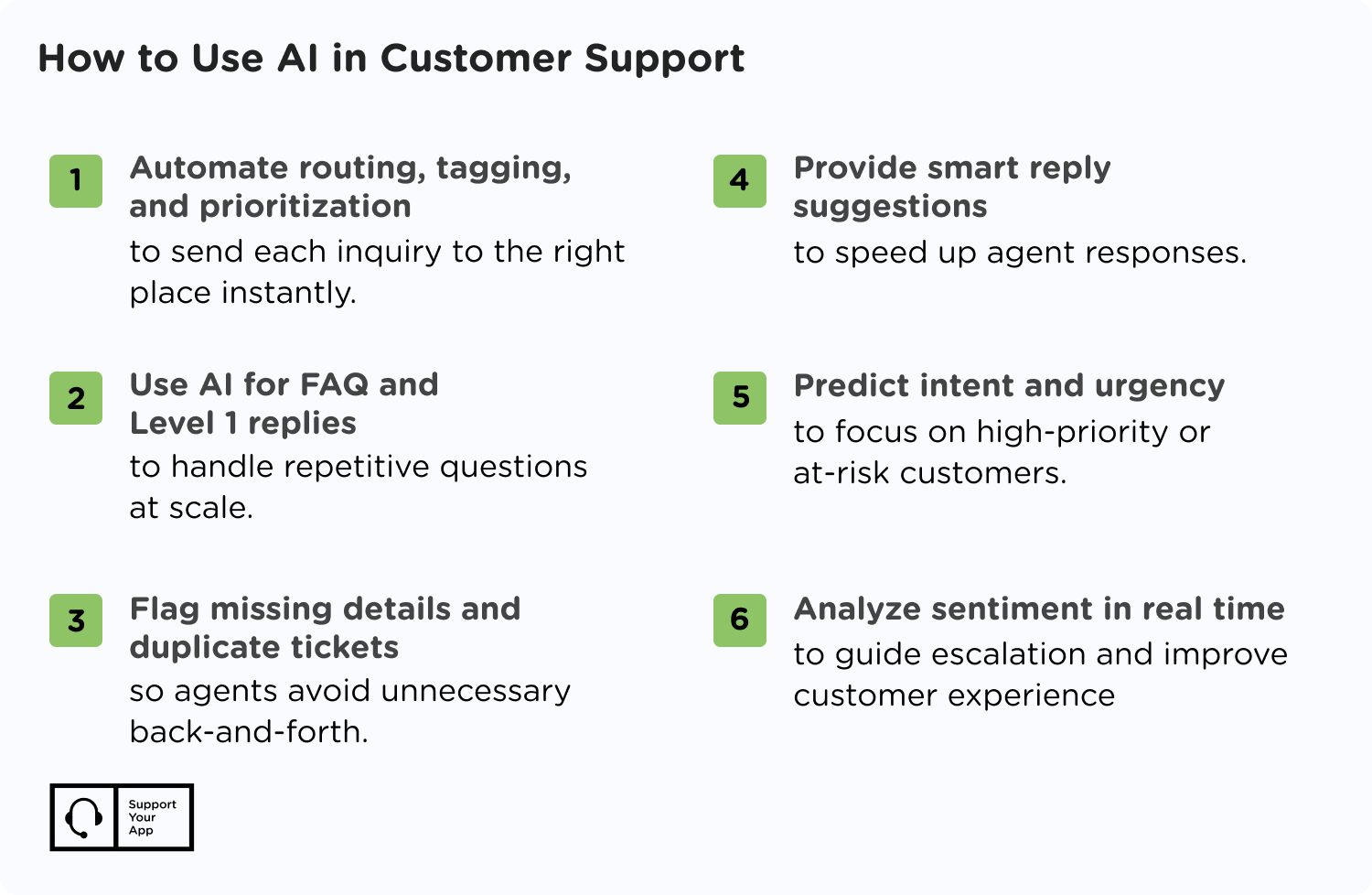
- Automate ticket routing, tagging, and prioritization so every inquiry is instantly categorized and sent to the best-suited agent or queue — reducing manual sorting and speeding up time-to-resolution.
- Deflect repetitive questions with AI-generated FAQ and Level 1 responses, giving customers fast, consistent answers while freeing agents to focus on complex or high-value conversations.
- Detect gaps or inconsistencies in incoming tickets by automatically flagging missing details, unclear issue descriptions, and duplicate requests — helping agents avoid back-and-forth and resolve issues faster.
- Provide smart reply suggestions that analyze conversation context and propose accurate, on-brand responses, boosting agent productivity and reducing handling time.
- Predict customer intent and urgency using AI models trained on past interactions, helping teams prioritize at-risk users, proactively intervene, and prevent escalations.
- Analyze sentiment and tone in real time to guide de-escalation, route frustrated customers to senior agents, or trigger special handling workflows.
More customers are opting to use self-service options to track orders, receive updates on delivery status, and manage returns. This helps reduce the workload on agents and allow them to focus on more complicated queries instead of simple ones.
Let's some up how you can use AI in ecommerce customer support in the table below.
Key takeaway
AI is no longer optional in ecommerce holiday support — it’s a key driver of speed, accuracy, and scalability. By adopting AI tools like chatbots and voice agents, businesses can reduce agent workload, improve self-service, and provide faster, more reliable customer experiences.
Mistake #6. Lack of Personalization
Lack of personalization has proven to have a major negative impact on customer service during the holidays when emotions are high. According to Demandsage, 76% of customers prefer to buy from brands that personalize their user experiences.
The worst thing that you can do is allow your customers to feel like “just another ticket”.
Lack of customer personalization leads to:
- Higher customer effort
- Poor retention
- Weaker customer relationships
Looking to outsource ecommerce customer service that can offer personalized live chat support as well as assistance across phone, email, and social media? SupportYourApp, an ecommerce support outsourcing company offers 24/7 omnichannel support with high scalability potential, reduced overhead costs, and a focus on growth and top-tier customer care.
Summary
The holiday season brings an increase in customer inquiries, exposing gaps in holiday ecommerce customer service operations. Without preparation, support teams can quickly become overwhelmed, leading to inconsistent service and poor customer experiences.
These factors include insufficient team members, inadequate training, poor communication, inefficient CRM systems, refusal to adopt AI, and impersonalized service.
Understaffed and ill-trained teams struggle to manage the spikes in delivery questions and order issues, resulting in slower responses, increased stress, and reduced customer satisfaction.
When departments like logistics, marketing, and support are not aligned, customers receive mixed messages about stock levels, delivery timelines, or promotions, leading to frustration and avoidable conflict.
Without tools like CRM and AI chatbots, support teams face heavier workloads and miss opportunities to assist customers more efficiently.
Finally, a lack of personalization weakens customer relationships. Generic responses and one-size-fits-all solutions make customers feel unimportant, reducing trust and loyalty during a season when interactions matter most.