
Your chatbot replies in seconds, yet customers still type "agent" over and over before they give up. That's a trust problem. If you run support for a SaaS or eCommerce brand, you've probably seen it. This guide explains why bots push people away and how personalized customer support wins them back, without scrapping the automation you already pay for.
Key Takeaways
- Chatbots lose customers when they miss context or block the path to a person, and both problems are easier to fix than most teams think.
- Personalization means using what you already know about a customer, not just dropping a first name into a greeting.
- The strongest setups let bots handle routine tasks and pass the whole conversation to a human for everything else.
- Small changes, like a warm handoff or a reply that remembers last month's problem, often matter more than a new tool.
Customers have been clear. A December 2025 SurveyMonkey study found that 79% of Americans strongly prefer dealing with a human over an AI agent. Companies keep adding bots anyway, since bots are cheap and never sleep. That gap between what businesses deploy and what people want is where frustration starts.
Rising Chatbot Adoption vs Rising Frustration
Businesses lean on chatbots for simple jobs like tracking orders or updating account details, especially in eCommerce customer support. The pitch is easy to like. Bots answer at any hour and scale without new hires. Savings alone don't build a personalized customer experience, though. That takes context.
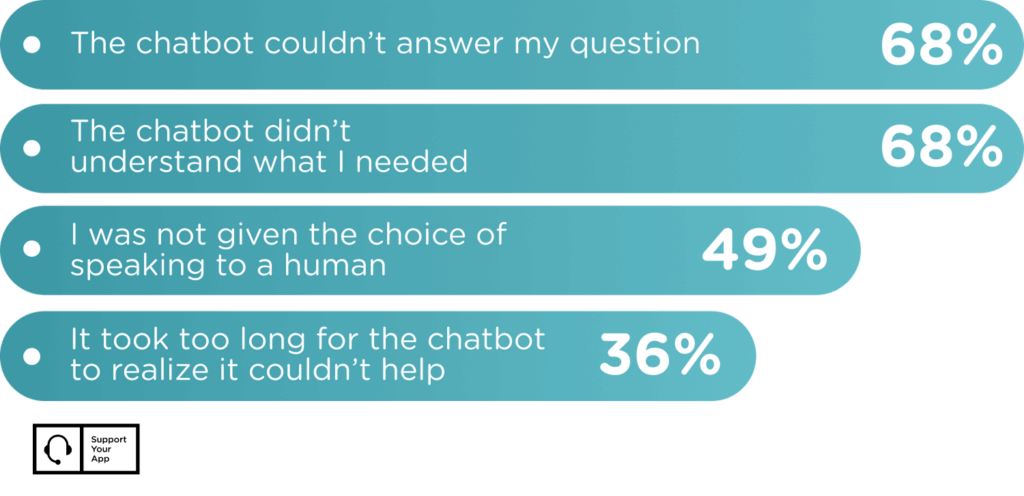
People can tell when a bot exists to save the company money rather than to help them. They hunt for the exit. They type "human" again and again, or they close the chat and try a competitor instead. Each of those moments chips away at trust you spent years building, and one bad afternoon can undo plenty.
Why Chatbots Are Losing Customer Trust
Most bad bot experiences trace back to a short list of failures. The technology isn't the problem. They come from bots built to deflect tickets instead of solving problems, with customer service personalization treated as an afterthought. Here's where things usually go wrong.
Misreading What Customers Need
A customer writes, "I was charged twice and my order still hasn't shipped." A rigid bot spots the word "order" and sends a tracking link. The billing problem simply vanishes. Multi-part messages and casual phrasing trip up scripted bots all the time. Every misread restarts the conversation.
Scripted Replies That Ignore Context
Generic answers work fine for store hours. They fall apart once a customer has history with you. A loyal subscriber with an open complaint shouldn't get the same canned reply as a first-time visitor. Memory is the whole point. A bot that treats every chat like a first date sends the wrong message.
Slow or Missing Human Handoff
The worst moment comes when the bot can't help and won't let go. Some bots bury the human option entirely. Others hand over the chat but drop its history. So the customer repeats everything. Twilio's 2025 conversational AI research found that only 15% of customers feel the human agent has full context after an AI handoff.
What Is Personalized Customer Service?
At its simplest, it means treating each customer as a specific person with a specific history. That history covers what they bought and what went wrong last time. A first name in an email is the entry level. The goal goes further. You want a reply that would only make sense for that one customer.
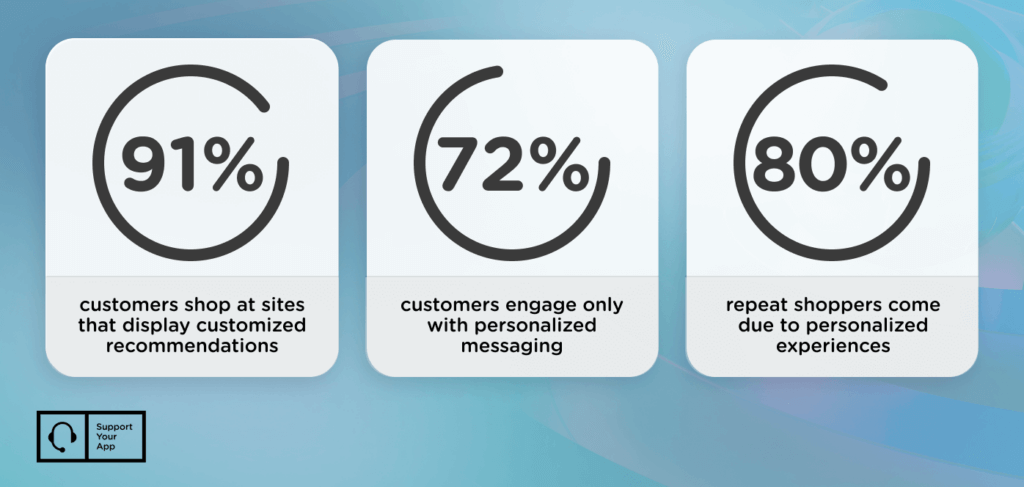
Demand for this keeps growing. In the same Twilio research, 88% of consumers said they want more personalized experiences. Meeting that demand doesn't need a huge budget. It needs your team, human or AI, to use the information you already collect in a way the customer can feel.
Chatbot vs Human Customer Service: Where Each One Fits
Bots aren't the villain here. They're excellent at fast, repetitive work where the answer barely changes from one person to the next. Humans earn their place when a problem gets emotional or needs judgment the script never covered. Most teams need both. And both should work from the same customer history.
Who Should Handle What
| Task | Better fit | Why |
| Order status and delivery updates | Chatbot | The answer comes straight from a system, and speed matters most |
| Password resets | Chatbot | It's a fixed process with no judgment involved |
| Billing disputes | Human agent | Money is involved, and customers want someone accountable |
| Complaints about a bad experience | Human agent | Empathy and the power to make things right count more than speed |
| Questions that mix account details and product advice | Human agent with AI assistance | AI pulls up the facts, and the agent decides what to say |
Still weighing the two options? Our breakdown of live chat vs chatbot covers the trade-offs. Our look at AI vs human customer service shows where each one wins. For teams that want people in the chat window, live chat support outsourcing puts trained agents there around the clock.
How to Personalize Customer Service
You don't need to rebuild your support operation from scratch. Most gains come from using the information you already hold more carefully. Decide upfront which conversations belong to bots and which belong to people. Start with what you have. The steps below work whether your front line is a bot, a person, or a mix of both.
Use Customer Data With Care
Good personalization starts with history. When a returning customer writes in, greet them by name and mention any open issue before they bring it up. That small step shows someone's paying attention. Collect only what helps you support them. Be open about how you use it, because trust disappears fast once data feels misused.
Design Conversations That Adapt
Among personalized customer service strategies, conversation design gets overlooked most. A well-built chat flow knows when to ask a clarifying question and when to step aside. Bots should follow the thread of a chat instead of resetting with every message. They should also spot frustration early. Repeated questions signal trouble.
Pass Full Context at Every Handoff
Repeating information is the fastest way to lose a customer's patience. When a chat moves to a person, the full transcript should travel with it. The agent can then open with "I see the refund didn't go through" instead of "How can I help?" That's personalized customer support. SupportCRM helps by pulling every channel into one agent workspace.
Balance Automation With Empathy
Automation has its place. Use it for routine updates like delivery status or password resets, and keep a clear path to a human for anything sensitive. Our agents use SupportBrain to draft replies and summarize long threads. Then they review and send every message themselves. Speed and care can coexist.
The split pays off for your team too. Agents stop retyping the same answer all day and save their energy for the chats that need it. Customers hear the difference. A tired agent on their ninetieth ticket sounds nothing like one who had help with the busywork.

Personalized Customer Service Examples
Plenty of brands talk about the human touch. Fewer build it into how their support team works day to day. The three cases below show what happens when automation and people share the workload. Each one does it differently. They range from airline social media to a small startup's inbox.
KLM Royal Dutch Airlines
KLM built its reputation on personal service through social media, where travelers often message in a panic. The airline added AI to answer common, repetitive questions. That freed human agents for conversations that need a personal approach. Bots cover the routine requests. People get personalized support when stress runs highest, like after a missed connection.
NatWest and Its Digital Assistant Cora
NatWest gave its banking assistant, Cora, a generative AI upgrade so it could understand the context behind each question. Before, a mortgage question returned a generic page to scroll through. When a human needs to step in, the system now summarizes the conversation for the agent. Nobody starts from zero.
Welcome to Bob
Welcome to Bob, a UK body wash startup, had its co-founders answering support themselves. SupportYourApp set up Gorgias AI Agent on email with a custom tone of voice. Replies sounded like the founders. The co-founders kept the complex cases, with 30 of 161 tickets passed to them. The Welcome to Bob case study shows response time fell by 99.7%.
Benefits of Personalized Customer Service
When customers feel known, the relationship changes shape. Small gestures add up fast. They stay longer and trust your recommendations more. They also forgive the occasional slip, because your shared history counts for something. Here's how that plays out in everyday support, from a single chat all the way to repeat purchases and referrals.
Stronger Customer Loyalty
People stick with brands that remember them. Recognizing a past order or an old complaint shows customers they matter as more than a ticket number. Competitors struggle to copy that. It comes from your shared history, not from price, and personalized customer support turns that history into a reason to come back.
Higher Customer Satisfaction
Tailored answers resolve problems faster, since agents skip questions they already know the answers to. Customers don't repeat themselves or wade through generic replies. For brands whose customers jump between chat and phone, omnichannel customer support keeps one consistent thread across every channel. Nobody likes starting over. Fewer repeats mean calmer customers.
More Revenue Opportunities
Relevant suggestions sell better than generic ones. An agent who knows a customer's plan can mention the upgrade that fixes their exact problem. That feels like help, not a pitch. Timing matters just as much. Good personalization in customer service also makes follow-ups land better, whether it's a check-in after a purchase or a note once you've fixed an issue.
Where Personalized Customer Support Goes Next
Customers aren't rejecting automation. They're rejecting automation that forgets who they are. The brands that get this right in 2026 use bots for speed and people for judgment, with one shared history underneath. Want help building that mix? SupportYourApp's team has spent 16+ years doing exactly this for growing tech companies.