

As a business owner, here's a decision you can't afford to get wrong: should you build an internal team to handle support, or partner with a third-party provider?
The stakes are real. Get it right, and you'll save money while scaling faster. Get it wrong, and you're stuck with sky-high costs and inflexible operations that can't keep pace with demand.
Here's what the numbers say: just 17% of organizations run in-house-only support. Another 23% outsource everything. But, 60% use a hybrid model, mixing both an internal and an outsourced team.
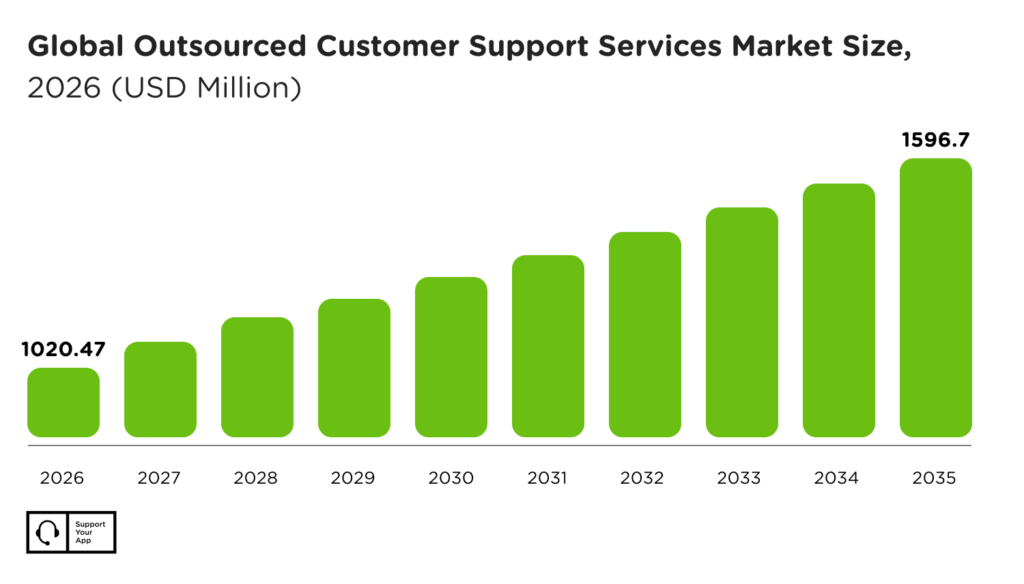
Why outsource customer service? Scaling opportunities, lower expenses, operational knowledge, and access to the cutting-edge technology stack an external call center brings — these are just some of the reasons. The outsourced customer support market hit $1,020 million in 2026 and is projected to reach $1,596 million by 2035.
In this article, we're breaking down the advantages and disadvantages of each approach. We'll run a detailed cost comparison based on operational costs, pricing models, and the potential for cost savings. Let's dive in.
Key Points
- In-house support demands high fixed costs and constant management overhead, while outsourcing offers variable pricing that scales with your actual demand.
- Hidden costs like recruitment, turnover, and opportunity cost push in-house expenses 25-40% beyond base salaries, making the true cost significantly higher than expected.
- Outsourcing typically delivers 50-65% cost savings through eliminated overhead, faster scaling, and reduced management burden, especially for fluctuating or high-volume support needs.
- Technology capabilities and industry expertise favor outsourcing partners who maintain cutting-edge tools and trained agents, while in-house teams often lack the budget for competitive infrastructure.
- Hybrid models combine the best of both worlds — keeping complex or core functions in-house while outsourcing routine tasks—balancing control, flexibility, and cost efficiency.
Challenges of Building in-House Support
Building in-house support gives you full control. But control comes with a price, and we're not just talking dollars. Here are some of the challenges and concerns you might face when building an in-house support function instead of employing an external team.
High Fixed Costs
Running an in-house operation requires significant upfront investment and ongoing spend:
- Salaries and benefits
- Office space and utilities
- Equipment (computers, phones, headsets)
- Supervisors and management
Here's the problem: costs stay high whether ticket volume is high or low. You can't scale down during slow periods without layoffs. And when demand spikes? You're scrambling to hire and onboard fast enough.
Turnover, Recruiting, and Hiring
Customer support often sees brutal turnover. That means constant recruiting, interviewing, onboarding, and training cycles.
The causes? Burnout for you and your Human Resources department. Emotional workload. Job stress.
It's expensive. It's time-consuming. And it creates productivity gaps that hurt the overall CX. Every departure means lost knowledge, rising training costs, and inconsistent service quality.
Scalability Constraints
Scaling in-house is slow. Really slow. Outsourced operations pull from a massive agent pool — one of the major benefits of outsourcing customer service. When ticket volume jumps, you need to hire, train, and equip new staff. That takes weeks or months.
Bottom line? Handling seasonal spikes is way harder with an in-house setup.
Technology
Strong support operations need serious tech: CRM software, VoIP systems, chat platforms, analytics tools, cybersecurity, and seamless integration across it all.
This demands specialized expertise and a skilled team. And that gets expensive fast.
Limited Operating Hours
Want 24/7 support? You're looking at night shifts, overtime, and extra staff. Labor costs balloon. You're left choosing between higher expenses or limited availability.
Key Takeaway
Building in-house support demands significant upfront investment, ongoing fixed costs, and constant management of recruitment, training, and turnover — challenges that persist regardless of ticket volume.
Key Differences Between Outsourcing and in-House Customer Support
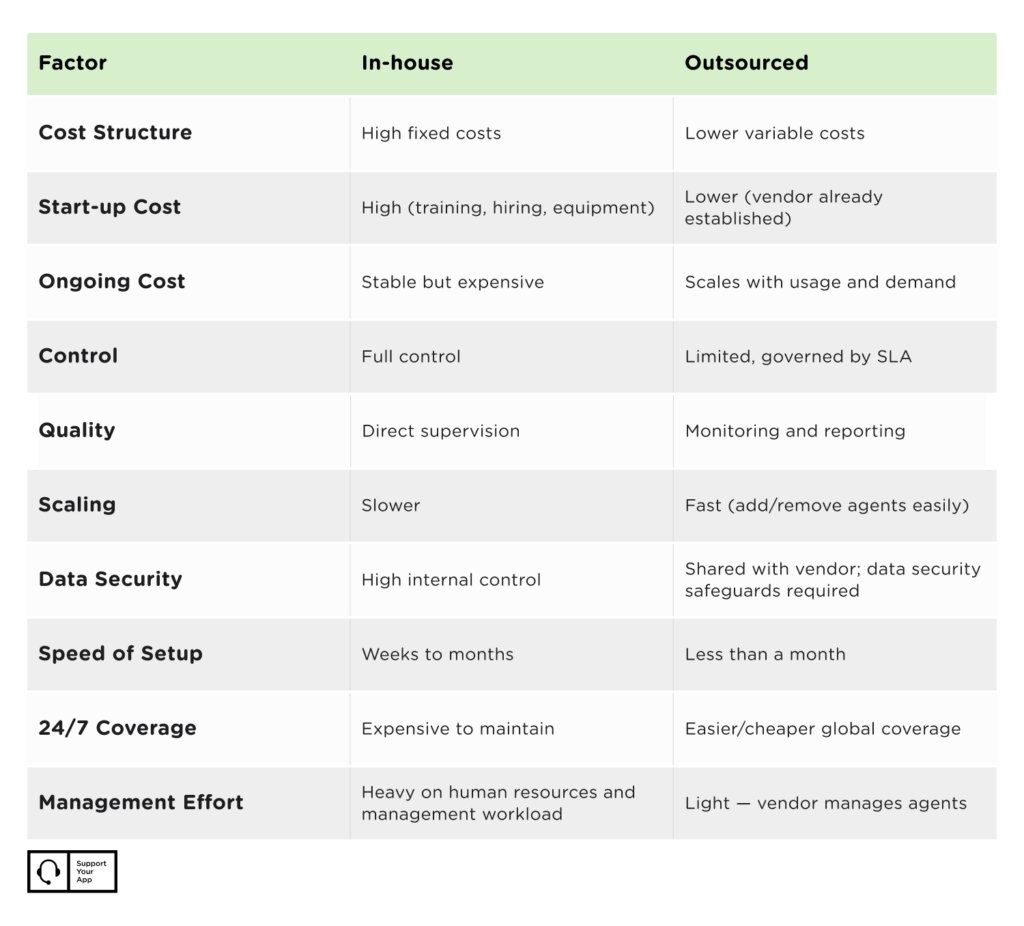
Here's the short version: in-house customer support is handled by employees you hire and manage directly. A BPO (Business Process Outsourcing Provider) handles outsourced customer service under an SLA. An SLA is a Service Level Agreement that defines performance standards, response times, and quality benchmarks your provider must meet.
The trade-off? In-house gives you brand alignment but costs more and scales slower. Outsourcing to a right provider can also guarantee alignment with your tone, costs less, moves faster, and flexes with demand — but you lose some control.
Here's a deeper comparison:
Technology Matters
When you need technical support, technology becomes a massive factor in the choice between in-house vs. outsourced IT support. Outsourcing vendors bring the best tools, software solutions, and integrations to keep pace with trends and maximize results.
In-house technical support teams often lack the budget or expertise to match that level of capability. Building and maintaining a competitive tech stack internally requires significant investment in both infrastructure and specialized IT talent.
When Each Model Works Best
Businesses chasing flexibility and scalability during peak seasons, such as retail, education, travel — thrive with outsourced teams. These providers adjust to high-demand periods without the hiring and training costs an internal operation would face.
But if internal control and quality management matter most, an in-house team delivers more consistent performance with targeted training. You can get there with outsourcing too, but it's easier to manage internally.
Want to choose the ideal partner? Look for strong data security, scalability, AI capabilities, and quality assurance.
Quick Decision Guide
Here's a rule of thumb for support type and budget planning:
- Small startups → Outsource to save money and scale faster
- Mid-size → Hybrid model, outsource overflow
- Large/complex → In-house or strategic hybrid
In case you decide to go for an outsourced vendor, the criteria for selecting one might include: security, scalability, AI capabilities, quality assurance, and industry expertise, and others.
Key Takeaway
In-house support offers full control and brand alignment but at higher costs and slower scalability, while outsourcing delivers variable pricing, faster setup, and operational flexibility with less direct oversight. Outsourcing also means less need of direct oversight that also gives the client more work bandwidth.
Hidden Costs of in-House Customer Service Teams
Here's what most companies miss: in-house support costs 25-40% more than just salaries.
What are those hidden costs?
- Recruitment and hiring costs
- Training and ramp-up time
- Employee turnover
- Overstaffing
- IT maintenance
- Premises and utilities
- Legal costs—compliance, contracts, consultations
- Opportunity cost
Opportunity Cost Is the Killer
Opportunity cost might be the biggest factor when deciding between in-house vs. outsourcing support, and the most overlooked hidden cost.
When you're managing support, you're not improving your core product. You're not innovating. You're not growing. That lost time? That's opportunity cost.
Economist Arthur Laffer nailed it:
"Outsource everything but your core business."

Cost Comparison: In-House vs Outsourced Support
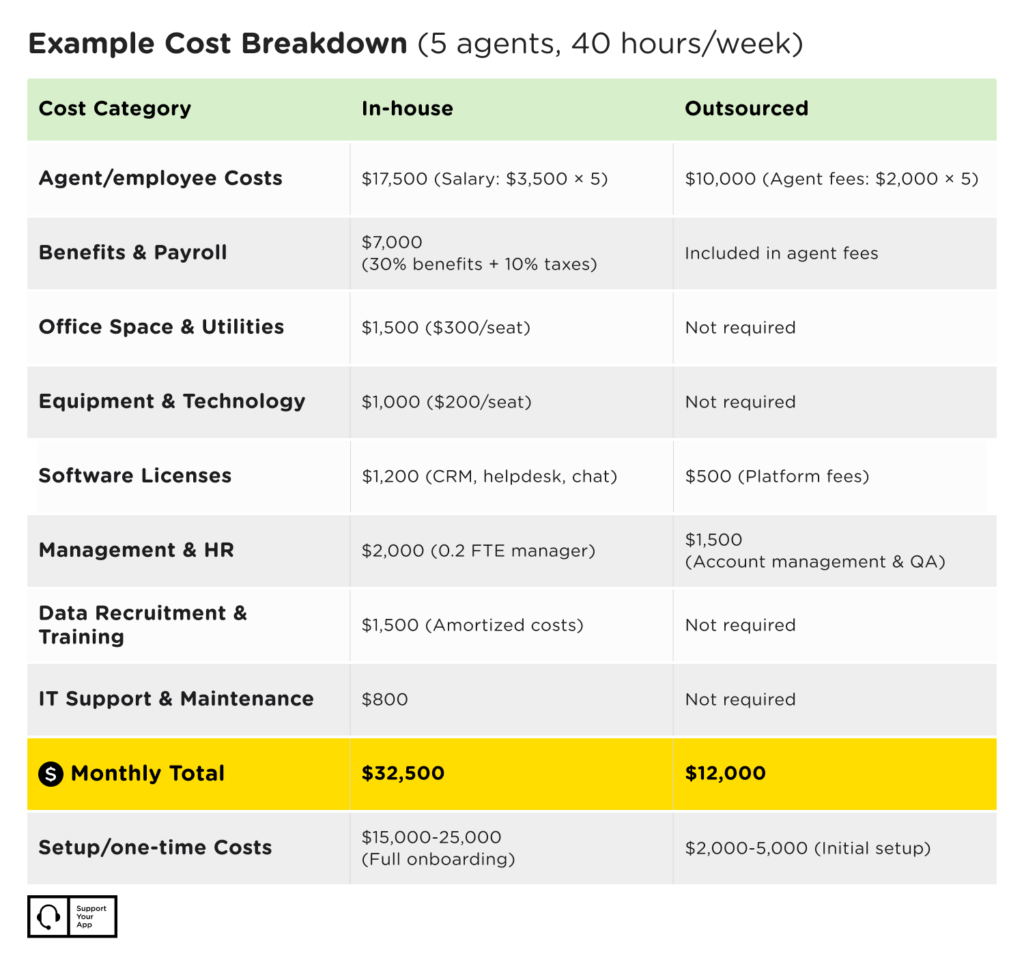
The cost difference breaks down like this: in-house operations run on fixed costs — salaries, software licenses, infrastructure like office space and equipment. Outsourced costs are variable, scaling with demand: per-agent or per-hour rates, setup and training fees, and quality assurance.
Example Cost Breakdown (5 Agents, 40 Hours/week)
Additional Hidden Costs (In-House Only):
- Turnover replacement: $5,000-8,000 per agent
- Productivity ramp-up time: 2-3 months at reduced efficiency
- Office overhead: Internet, phones, supplies, furniture
- Benefits administration and HR management time
Cost Difference
$32,500 - $12,000 = $20,500 per month (~63% savings)
These examples reflect mid-tier offshore support. Actual costs vary by provider location, service complexity, and support hours.
When in-House Is Cheaper
In-house can win if:
- Support volume is so low that an agent can be used for multiple roles at the same time
- Your product is highly specialized and complex
- Long-term team retention is strong
In-house support typically battles high employee churn — job stress drives turnover rates between 20-30%. That churn pressures remaining staff and drives training costs even higher.
When Outsourcing Is Cheaper
Outsourcing wins when:
- Ticket volume is high and fluctuating
- 24/7 coverage is needed
- Seasonal spikes hit hard
- Cost reduction is critical
Dedicated vs. Shared Support
The decision between shared vs. dedicated support also impacts the true cost of outsourcing. Dedicated teams suit businesses with complex products, high-value customers, and stable volumes. Shared teams work when volumes are high, brand image isn't critical, queries are routine, and you can handle the risk of a rotating team.
Key Takeaway
Outsourcing typically delivers 50-65% cost savings compared to in-house operations, primarily through variable pricing that scales with demand, elimination of fixed overhead, and reduced management burden.
In-House vs Outsourcing Customer Service Pros and Cons
Understanding the pros and cons helps you pick the model that aligns with your operational needs, strategic goals, and budget.
What In-House Support Does Best
Want control? In-house delivers. You get direct oversight of every interaction, strong brand alignment that keeps messaging consistent, and deep product knowledge that only comes from dedicated internal teams. Accountability is built-in—your team answers directly to you, not a third-party contract.
But here's the catch: that control comes at a price. High fixed costs eat into budgets whether you're busy or slow. Hiring and turnover become constant headaches, especially in support roles with 20-30% annual churn. Scalability? Painfully slow. Need more agents? Start recruiting, training, and onboarding—expect weeks, maybe months. And if you want 24/7 coverage, prepare to pay premium rates for night shifts and weekend staffing.
What Outsourced Support Does Best
Outsourcing flips the script. Variable pricing means costs scale with actual demand—no paying for empty seats during slow periods. Need to ramp up fast? Outsourced teams add agents in days, not months. Setup takes less than a month versus the multi-month hiring cycles in-house operations face. The management burden? Nearly eliminated. Your vendor handles recruitment, training, scheduling, and agent performance while you focus on core business priorities.
Plus, 24/7 global coverage becomes affordable through distributed teams across time zones.
The trade-offs? You sacrifice some direct control. Communication barriers can emerge, especially with offshore teams. Data security requires strong vendor oversight and clear safeguards. And yes, you'll depend on your vendor's performance—which makes choosing the right partner absolutely critical.
Both approaches have strengths and weaknesses. The advantages of an in-house support are undeniable when it comes to full control. But do you need that full control? What works best for you, will actually depend on your industry, budget, and product type.
Still considering whether you should outsource or not? We are a customer service provider with 15+ years of expertise providing call center services and following only the best practices in modern support. With 250+ clients in our portfolio, we can help you determine whether outsourcing or in-house support is the right fit for your business right now.
Key Takeaway
The choice boils down to priorities: in-house wins on control and deep product knowledge, while outsourcing wins on cost efficiency, scalability, and operational simplicity—with many businesses finding success in a hybrid approach.
Summary
Choosing between in-house and outsourced customer service is a strategic move that shapes cost, efficiency, and customer experience.
In-house support delivers full control over quality, brand alignment, and deeper product knowledge, but comes with higher fixed costs, recruitment challenges, and operational complexity. Outsourced support offers lower costs, faster setup, and easier scaling, though you'll trade some control for flexibility.
Many businesses go hybrid, keeping complex functions in-house while outsourcing routine tasks. The right choice depends on your priorities: maximum control and expertise favor in-house, while cost efficiency and scalability favor outsourcing.
Like it? - Share:



Dimitar Dimovski
Senior Delivery Manager
Dimitar is a Senior Delivery Manager with experience managing US clients and leading a team of 100+ people. He embodies a calm approach, preferring straightforward communication. Delivering results without excess or complication is his motto. In his personal time, he likes to travel, hike, work out and is an avid Manchester United fan.
Posted on February 10, 2026

Support Insights




Customer Support Trends 2026: Are You Ready?
Benchmark your customer support against key 2026 trends.