

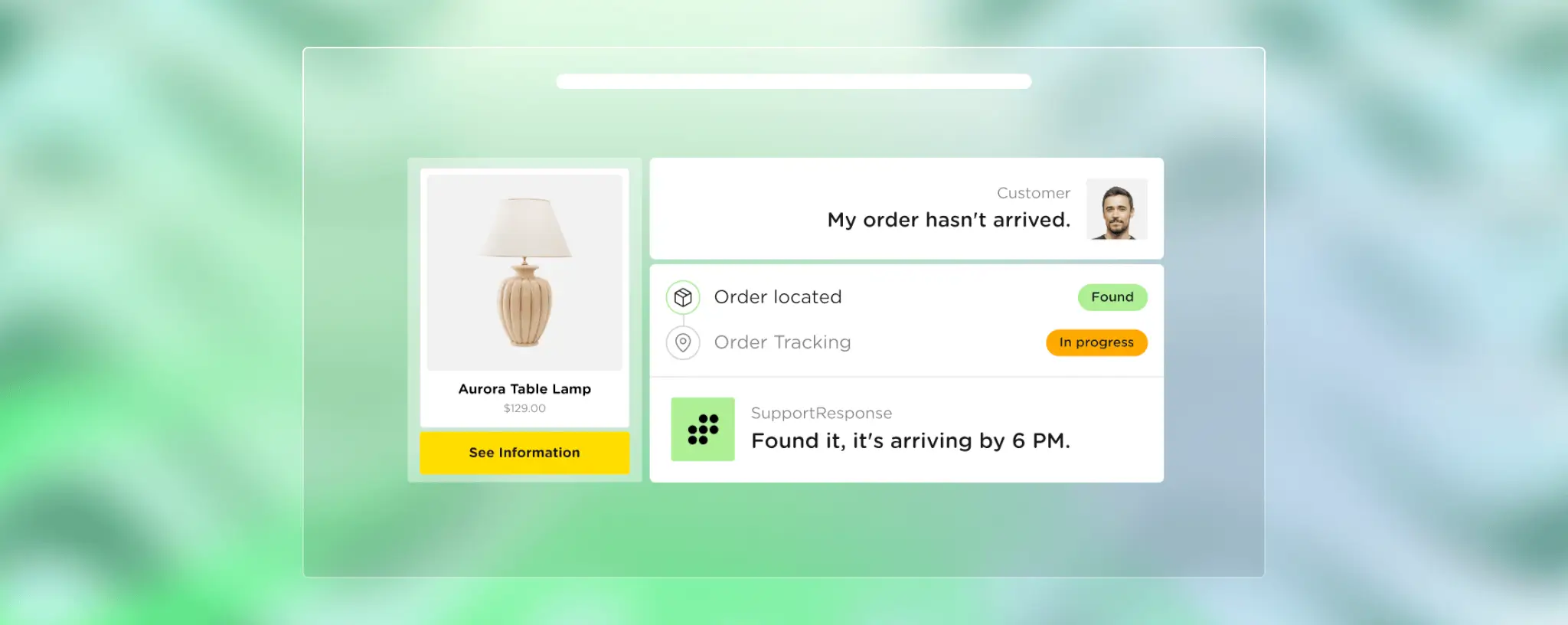
Unanswered questions and slow email threads cost ecommerce stores sales every day. eCommerce live chat provides real-time help across every stage of checkout, eliminating long email wait times.
This guide covers what it actually takes to run live chat well in 2026: staffing, software, SLAs, and when outsourcing makes more sense than hiring.
TL;DR
- Live chat covers more than "how can I help": cart recovery, returns, WISMO, and pre-sale questions all run through it.
- Getting staffing wrong, whether understaffed or over-built, is the most common live chat mistake stores make.
- The right software choice comes down to your helpdesk setup, not personal preference.
- The right in-house versus outsourced choice comes down to order volume.
What eCommerce Live Chat Support Covers
Customer patience is shrinking fast. 85% of CX leaders say customers will drop brands over unresolved issues, even on the first contact, according to Zendesk's 2026 CX Trends report. Live chat exists mainly because email and phone can't keep up with that shift, not because it's trendy.
eCommerce chat support isn't one thing. It shows up differently depending on where a shopper is in their journey, and a good setup covers all of these moments, not only the obvious ones.
- Pre-sale questions: sizing, compatibility, shipping times, stock availability
- Order status and WISMO ("where is my order")
- Returns, refunds, and exchange requests
- Checkout friction: failed payments, promo codes, address errors
- Cart recovery: proactive nudges to shoppers who stall at checkout
- Post-purchase: setup help, warranty questions, reorder requests
Miss any one of these, and you're pushing shoppers toward email, where response times run in hours instead of seconds. Staffing chat only for pre-sale questions pushes growing return and WISMO inquiries to slower channels.
Reactive chat waits for shopper input, while proactive chat triggers automatically based on user behavior, such as page dwell time. Most stores need both. Reactive chat handles the questions shoppers already know they have, while proactive chat catches the hesitation they haven't put into words yet.
Benefits of Live Chat for eCommerce
Live chat in ecommerce works differently than it does in B2B software. Purchase decisions happen in minutes, not weeks, so a delayed answer often means a lost sale instead of just a delayed one.
The ecommerce live chat support advantage shows up first in cart recovery. Proactive checkout chats turn abandoned carts into sales by quickly solving coupon or shipping hesitations.
It also heads off returns before they happen. Nearly one in five online orders gets sent back: 19.3% in 2025, according to the NRF and Happy Returns Retail Returns Landscape. A chat agent who catches a sizing or fit question before checkout can prevent some of that entirely, rather than dealing with the refund a few weeks later.
Live chat yields higher satisfaction than email because shoppers receive answers while actively deciding to purchase. That immediacy is the whole point.
Live chat for ecommerce isn't optional anymore in competitive categories like fashion and electronics. Preventing a poor-fit order via chat costs significantly less than handling subsequent returns, refunds, and negative reviews.
How Many Agents Does eCommerce Live Chat Actually Need?
This is the part most guides skip. Staffing live chat wrong, in either direction, wastes money or costs you sales. The right number depends on monthly chat volume, not gut feel or what a competitor happens to run.
| Monthly chats | Agents needed | Coverage model |
| Up to 2,000 | 1-2 | Business hours, single shift |
| 2,000-8,000 | 2-4 | Extended hours, overlapping shifts |
| 8,000-20,000 | 4-8 | 24/7 with follow-the-sun shifts |
| 20,000+ | 8+ | 24/7 with dedicated peak-season surge staffing |
A trained consultant can usually handle 3 to 5 concurrent chats without response times slipping. Push past 6 or 7, and first response time creeps past two minutes while agents start copy-pasting instead of really helping, which shows up in satisfaction scores fast.
Past that concurrency ceiling, chats queue and shoppers abandon mid-conversation. Adding staff beforehand is far cheaper than losing buyers to competitors due to mid-checkout chat delays.
Live Chat SLAs That Hold in eCommerce
An SLA that looks good on paper but breaks under Black Friday traffic isn't a real SLA. These are the numbers that tend to hold up in practice, based on where satisfaction scores start dropping.
- First response: under 30 seconds for most stores, with 2 minutes as the outer limit before satisfaction starts eroding noticeably
- Resolution time: under 10 minutes for standard tickets, longer for refund investigations that need a warehouse check
- Concurrency: 3 to 5 chats per consultant, fewer during peak periods when questions get more complex
- Abandonment: under 5%, rising sharply once agents pass their concurrency ceiling
A chat program that doesn't track abandonment is flying blind. Shoppers who abandon mid-chat often buy from competitors, making chat abandonment a crucial metric to monitor.
These numbers also shift by ticket type, and treating every chat the same way is a common mistake. A pre-sale sizing question and a chargeback dispute don't belong on the same SLA clock, even if both technically arrived through the same widget.
What Breaks During Peak Season
Peak season doesn't just add volume. It changes the shape of every problem a store already has, and it does it fast.
During 2025's holidays, US online sales reached $257.8 billion, including a $14.25 billion Cyber Monday record. Chat volume spikes just as hard, usually right alongside traffic and cart activity.
Concurrency limits get blown past first. Response times slip past SLA within hours. Stacked chats cause agent burnout and spike abandonment rates at peak conversion times without a surge plan.
Build surge staffing into the plan months ahead, not the week before Black Friday. That means pre-training extra agents on returns and WISMO scripts, and testing the helpdesk under simulated load before real traffic arrives.
Live Chat Software for eCommerce: What to Look For
The right live chat software depends on your existing helpdesk, your channel mix, and whether you want AI handling routine questions. Here's what truly matters when comparing tools:
- Native integrations with your store platform for order and refund lookup
- Proactive triggers for cart abandonment and long time-on-page
- An AI layer that can handle routine questions without a full helpdesk rebuild
- Compatibility with the helpdesk you already run
- Mobile-first chat windows, since most ecommerce traffic is mobile
- Pricing that scales with volume
eCommerce Live Chat Software Compared
| Tool | Best For | eCommerce Integrations | AI Layer | Pricing Model |
| Gorgias | Shopify-native stores | Deep Shopify, order and refund actions | Built-in AI agent | Per-conversation, tiered plans |
| Tidio | Small to mid-size stores | Shopify, WooCommerce | Lyro AI chatbot | Flat monthly, per seat |
| Zendesk | Larger stores on an existing helpdesk | Broad, via app marketplace | Add-on AI agents | Per-agent, tiered |
| Intercom | Stores wanting one unified inbox | Native and API-based | Fin AI agent | Per-seat, plus usage add-ons |
| LiveChat | Stores wanting a lightweight dedicated tool | Shopify, WooCommerce, Magento | Add-on AI bot | Per-agent, monthly |
| Freshchat | Stores already on Freshworks | Shopify, WooCommerce | Freddy AI | Per-agent, tiered |
None of these is the universal right answer. Tool selection depends on your current tech stack, required integration depth, and preference for standalone or integrated apps.
The AI layer is worth testing before you commit to a plan. Ask vendors which issues their AI resolves without human escalation before committing to a plan.
In-House vs Outsourced eCommerce Live Chat
Both models work. The right one depends on order volume, growth speed, and whether hiring and training a team pulls focus from running the store itself.
| Model | Cost Structure | Coverage | Ramp Time | Best For |
| In-house | Fixed salaries plus software license | Limited to shifts you can staff | Weeks to hire and train | Steady, predictable volume |
| Outsourced | Per-agent or per-chat pricing | 24/7 achievable without night-shift hiring | Days to a few weeks | Fast growth or sharp seasonal peaks |
In-house teams know the product cold and skip the handoff that comes with any external partner. Outsourced teams get you 24/7 coverage without hiring a night shift, and a partner already running live chat outsourcing programs can staff up for peak season in advance.
Neither option is automatically cheaper. It depends on your volume, how hard that volume swings between seasons, and how much management time you can spend on hiring and scheduling.
How to Implement Live Chat on an eCommerce Store
Think of this as a short ecommerce live chat implementation guide. The order these steps happen in matters more than which tool you pick first.
- Map your top ticket types before choosing software, so you're not paying for features you won't use.
- Connect the chat tool to your store platform for real order and refund lookup.
- Set proactive triggers for cart abandonment and long time-on-page, but don't overdo the pop-ups or shoppers start ignoring them.
- Staff to your actual concurrency limit, not a guess pulled from a vendor's sales deck.
- Build a peak-season staffing plan before you need it, not during Black Friday week.
- Track first response, resolution, and abandonment starting week one, so problems show up before they've cost you a season's worth of sales.
Metrics to Track
A handful of numbers tell you whether live chat is really working. Track these from day one instead of waiting for a quarterly review to notice a problem.
| Metric | What Good Looks Like | What It Tells You |
| First response time | Under 30 seconds | Whether staffing matches volume |
| Resolution time | Under 10 minutes for standard tickets | Whether agents have the right tools and access |
| Chat abandonment rate | Under 5% | Whether wait times are pushing shoppers away |
| CSAT | 85%+ | Whether the experience matches the speed |
| Chat-to-conversion rate | Tracked against your own baseline | Whether chat is driving sales, not just deflecting tickets |
None of these matter in isolation. A fast first response with a high abandonment rate usually means agents are replying quickly, then leaving the shopper stuck without a real answer.
Review these weekly during normal months and daily during peak season. A metric that only gets checked once a quarter can't catch a problem before it's already cost a week of sales.
How SupportYourApp Runs Live Chat for eCommerce Brands
SupportYourApp has run ecommerce customer support programs, including live chat, for over 16 years across 60+ languages. Teams are PCI DSS Level 1 certified and ISO 27001 compliant, which matters the moment chat touches order or payment details.
That experience covers the staffing question this guide keeps coming back to: matching agent count to real chat volume and building surge capacity before peak season.
If in-house staffing distracts from core operations, consult an expert about tailored outsourcing for your order volume.

Summary
Live chat for ecommerce succeeds when accurately staffed to real volume, protected by resilient SLAs, and integrated into your helpdesk. Whether that team sits in-house or outsourced, the numbers should make the call.
Weighing your own live chat setup against this? Reach out, and we'll help you figure out what fits.