

This guide is for high-growth tech companies deciding between chatbot tools they self-manage in-house and AI support fully managed by an outside provider, so response times drop without overloading their team.
TL;DR:
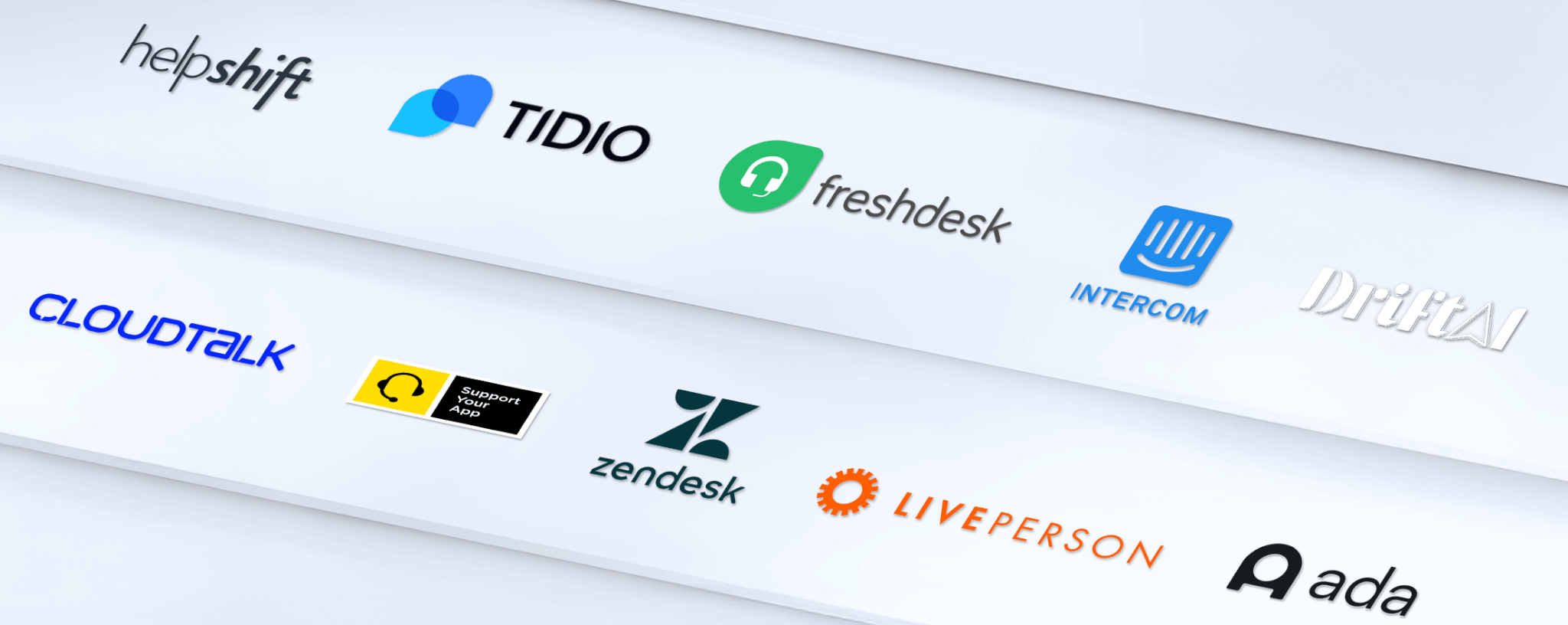
- Self-managed tools like Intercom, Tidio, and Zendesk give you full control, but only if your team has the bandwidth to run them.
- Managed AI chatbot solutions hand implementation and training to outside experts, a better fit when there are no resources for hands-on control.
- Five factors decide the right fit: response accuracy, integrations, scalability, human handoff, and pricing.
- One company slashed resolution times from hours to minutes after switching to a managed solution. We'll show you exactly how.
Chatbot shopping shouldn't feel confusing, but it does. Some teams grab a chatbot tool and wonder why response times barely move. Others hand everything to a provider and lose sight of their own data. Both mistakes get expensive fast.
This guide breaks down the top AI chatbots for customer service, split into two camps: tools you run yourself, and providers who run it for you. Both paths can get you to faster response times and happier customers. By the end, you'll find the best customer service chatbot for your resources, your budget, and your customers.
What Makes a Good AI Chatbot for Customer Service?
Picking the right AI chatbot means more than grabbing the cheapest option or the one with the longest feature list.
We think five criteria separate the good from the forgettable, and together they define the best customer service chatbot on the market right now.
1. Response Accuracy
A chatbot's most important job is understanding intent, holding context, and giving answers customers can trust. Judge it on how well it handles routine questions, tricky edge cases, and conversations that switch languages mid-thread.
2. Integration Options
A chatbot that can't pull customer data, open tickets, or update records is just a chat window. Look at how well it connects with help desk software, eCommerce platforms, communication channels, and the APIs your team already relies on.
3. Scalability
Support volume swings hard during growth spurts and seasonal peaks. The right platform handles that swing without response quality dropping off. Check for enterprise readiness, multilingual support, and true omnichannel deployment.
4. Human Handoff
Even the best AI chatbot for customer service can't close every ticket alone. That's where clean handoff functionality matters, alongside genuine human-in-the-loop AI customer support, where an agent uses AI to draft replies and pull up account details, then reviews and approves everything before it reaches the customer. Look for solid escalation workflows too, not just a "talk to a human" button that goes nowhere.
5. Pricing Model
Some providers charge per seat, others bill by conversation volume or feature tier. Weigh transparency, the real cost of scaling up, and whether a free plan actually reflects what you'd pay in production.
6. Security
Customer conversations often include personal, financial, or account data. Confirm the chatbot supports encryption, role-based access controls, and compliance standards like GDPR, HIPAA, or PCI DSS before trusting it with sensitive information.
Not every AI solution serves the same business. That's why we've split our top AI chatbot tools for customer service into their own section below.
AI Chatbot Tools: Best Options to Run Yourself
This section is built for teams with in-house CX, IT, or development resources ready to configure, customize, and maintain a chatbot platform. These tools trade some hand-holding for control.
1. Intercom (Fin AI)
Short overview:
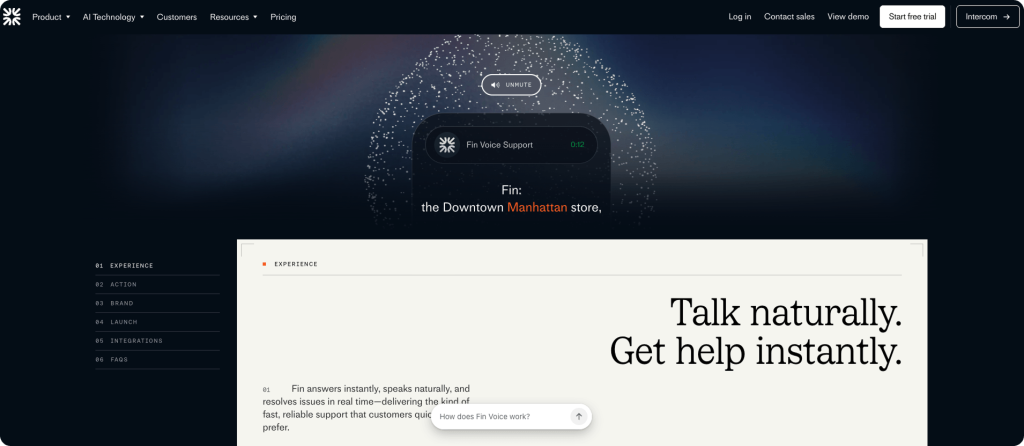
Intercom blends AI-powered support, live chat, help desk functionality, and proactive engagement into one platform.
Key features:
- Pulls from your company knowledge base to answer customer questions
- Covers every major support channel in one inbox
- Gives teams a shared view of conversations for real collaboration
Pros:
- Strong conversational AI with genuinely good language understanding
- Interface that's easy to pick up fast
- Smooth handoff from AI to human agents
Cons:
- Premium pricing that can price out small or early-stage teams
- Advanced automation features locked behind higher-tier plans
- Works best if you're already invested in Intercom's broader platform
Best for:
Businesses that want one unified platform with serious AI automation, especially teams handling high request volumes who still want tight collaboration between bots and humans.
2. Tidio
Short overview:
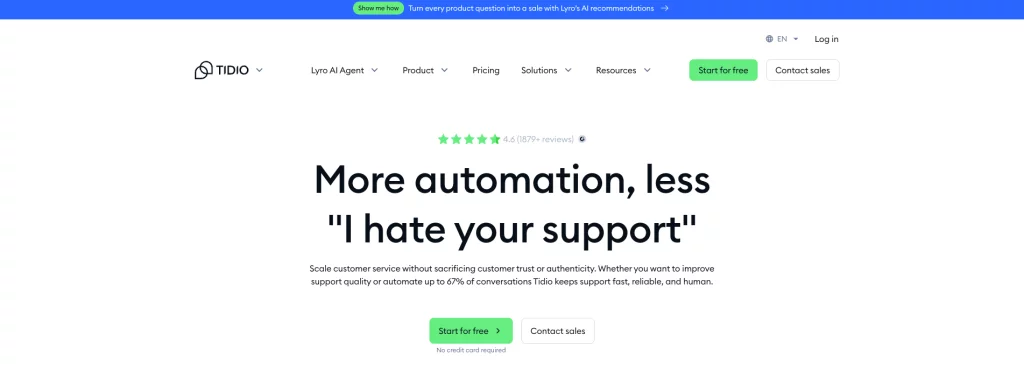
Tidio is built for small and mid-sized businesses, with a clear lean toward eCommerce.
Key features:
- Live chat with smooth AI-to-human transfer
- Ready-made templates for support, lead generation, and sales
- Native integration with popular eCommerce platforms, CRMs, and help desks
Pros:
- Low-code builder anyone on the team can use
- Fast to set up and launch
- Deep integration with eCommerce tools
Cons:
- Less depth than platforms built for enterprise scale
- Limited customization for complex workflows
- Some useful features sit behind upgraded plans
Best for:
Small and mid-sized online retailers who want an affordable chatbot they can launch quickly, without needing a technical team to babysit it.
3. Zendesk

Short overview:
Built to plug into Zendesk's broader platform, Zendesk AI uses generative AI and machine learning to automate conversations, suggest replies, and close out common questions.
Key features:
- Smart ticket routing with automated workflow management
- Clean escalation from chatbot to live agent
- AI-assisted tools that speed up human agents
Pros:
- Combines AI, ticketing, live chat, and knowledge management in one place
- Built to scale with growing support volume
- Deep integration and customization options
Cons:
- Costs more than most standalone chatbot tools
- Setup and configuration often need technical support
- A bigger feature set than smaller teams may ever use
Best for:
Mid-sized businesses and enterprises already in the Zendesk world, looking for AI automation, omnichannel support, and ticket management under one roof.
Key Takeaway:
Intercom, Tidio, and Zendesk each solve a different problem. These AI chatbot tools for customer service reward teams with the bandwidth to configure and maintain them. The right pick comes down to your size, budget, and technical depth.
Managed AI Chatbot Solutions
Not every team has the bench to build and run a chatbot alone, and that's fine. A managed AI chatbot solution fits businesses that want AI-powered support without building, training, and babysitting a chatbot in-house.
1. SupportYourApp
Short overview:
SupportYourApp pairs AI automation with human expertise to build support that scales without losing a personal touch. Instead of handing you a standalone tool and walking away, the team designs, deploys, and manages each AI chatbot for customer support it builds.
That approach pairs an AI agent for customer service with live human agents, so routine work runs on autopilot while people handle the more high-stakes and complex cases.
Key services:
- Full AI chatbot implementation, configuration, and ongoing management
- AI-assisted support tied directly to human agents for clean escalation
- Custom training using your company's documents, FAQs, and knowledge base
Pros:
- Secure setup: ISO-certified, PCI DSS-, GDPR-, and HIPAA-compliant
- Cuts the need to hire, train, and manage an in-house support team
- Built for omnichannel, multilingual, 24/7 support
Cons:
- Custom pricing means no simple price list to compare against
Best for:
Growing businesses operating across eCommerce, fintech, SaaS, software, and travel & hospitality industries that want AI-powered support without managing the technology themselves.
The Cocoatech case study shows how SupportYourApp automated half of incoming chats, sorted complex requests, and kept support fast and personal.
SupportYourApp's chatbot went from 0 to 474 chats a month, then 490 chats (81%) within two months, cutting resolution time from 8 hours 54 minutes down to 5 minutes 12 seconds.
That kind of jump is what happens when one of the best AI chatbots for customer service enters a client’s support workflows.
2. TTEC
Short overview:
TTEC is a global CX outsourcing provider that deploys conversational AI and virtual assistants at enterprise scale, alongside strategy and implementation support.
Key services:
- End-to-end chatbot strategy, development, and ongoing management
- AI assistants shaped around specific customer journeys
- Continuous tuning based on real interaction data
Pros:
- Removes the need for in-house AI development skills
- Strong global delivery with real multilingual reach
- Deep experience folding AI into existing contact center operations
Cons:
- Built more for medium and large enterprises than small teams
- Implementation takes real planning and coordination
- Less room for teams that want in-house control
Best for:
Medium and large businesses with high request volumes or international operations, looking for a fully managed AI setup.
3. Concentrix
Short overview:
Concentrix manages chatbot and conversational AI as part of a broader digital engagement offer, partnering with businesses to design, deploy, and tune AI interactions that connect with human teams.
Key services:
- Full chatbot design, deployment, and lifecycle management
- Clean escalation from AI assistants to live agents
- Workflow automation and smart conversation routing
Pros:
- Fully managed from end to end
- Strong global delivery with multilingual reach
- Ongoing tuning and performance tracking
Cons:
- Aimed mainly at medium and large businesses
- Custom pricing makes cost comparisons harder
- May include more than simpler support setups need
Best for:
Medium-sized businesses and enterprises that want chatbot support as part of a wider CX strategy, especially with global or omnichannel needs.
4. Influx
Short overview:
Influx pairs AI automation with outsourced support teams, running and tuning AI agents that handle repetitive work while people take on the complex requests.
Key services:
- Hybrid model combining AI automation with live agents
- Custom chatbot training on your knowledge base, FAQs, and docs
- Workflow automation and smart ticket routing
Pros:
- Removes the need for an in-house AI support operation
- Flexible model that scales with demand
- Blends AI speed with human judgment
Cons:
- Pricing is custom rather than published in tiers
- Less customization than dedicated AI software vendors
- Specialized workflows may need extra coordination
Best for:
Fast-growing startups, software companies, and eCommerce businesses that want to scale support without building an in-house AI team.
Tools vs Managed Solutions: Quick Comparison
Numbers only tell part of the story, so use the table below to compare our top AI chatbots for customer service side by side before you commit to either path.
| Criteria | AI Chatbot Tools | Managed AI Chatbot Solutions |
| Setup | Self-service setup, internal configuration and training. Speed depends on your team's bandwidth. | Provider handles implementation, training, integrations, testing, and tuning. |
| Control | Full control over design, workflows, and updates. | Less day-to-day control, though you weigh in on strategy. |
| Cost Model | Usually subscription-based, priced by users, conversations, or tier. Lower upfront cost, more internal staffing. | Custom pricing based on scope and volume. Higher service cost, less internal work. |
| Human Oversight | Your team monitors performance and updates the knowledge base. | Provider monitors performance, handles escalations, and pairs automation with trained agents. |
| Best for Team Size | Teams with dedicated IT, CX, or dev resources. | Fast-growing or resource-limited teams that want a managed option. |
How to Choose the Right Option for Your Team
The best AI chatbots for customer service depend on your technical bench, growth stage, budget, and support goals, not on whatever tool ranks highest in a listicle.
Got an in-house IT, CX, or development team ready to build and maintain a chatbot? Pick a tool.
Short on AI expertise, or trying to move fast without adding headcount? A managed AI chatbot solution handles implementation, training, tuning, and monitoring for you.
There's no single right answer. The best pick matches your team's skill set and what your customers expect.
Summary
Choosing the best AI chatbot for customer service comes down to weighing response accuracy, integrations, scalability, human handoff, and pricing against what your team can realistically run.
Teams with in-house technical skill often do well with tools like Intercom, Tidio, and Zendesk, which trade hand-holding for control.
Teams with less internal bandwidth, or ones scaling fast, tend to find more value in managed AI chatbot solutions like SupportYourApp, TTEC, Concentrix, and Influx, where a provider carries the implementation and the upkeep.
Whichever direction you pick, match it to your technical reality and your customer service goals first.